 Hypno
HypnoFear of Childbirth Hypnobirthing: How It Supports Birth Fear Without Replacing Professional Care
200,000+ moms • ORCHA NHS Certified • Free on iOS & Android
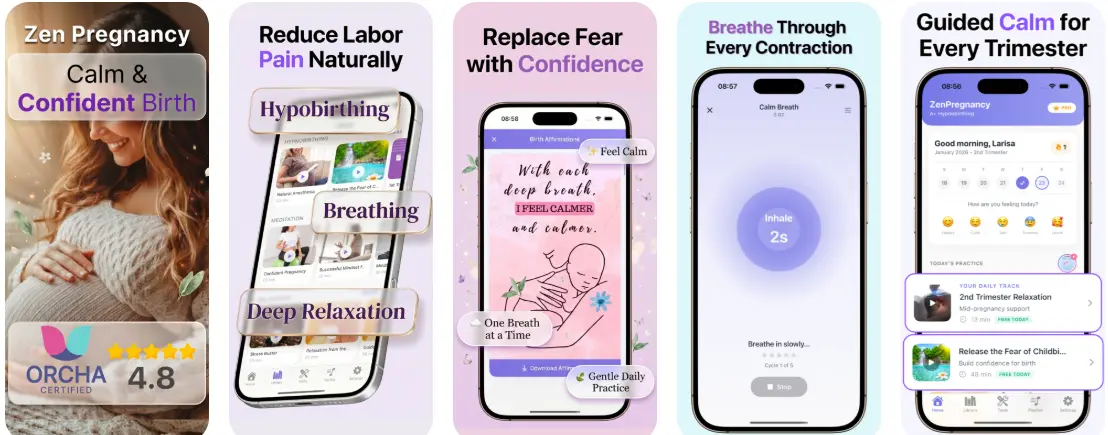
Fear of childbirth hypnobirthing uses guided relaxation, breathing techniques, and positive suggestion to help reduce birth anxiety and break the fear–tension–pain cycle. It works as a complement to midwifery and obstetric care, not a replacement. For severe fear, including tokophobia, professional mental health support remains essential alongside any hypnobirthing tools.
> Definition: Fear of childbirth hypnobirthing is the use of self-hypnosis, breathing exercises, visualisation, and affirmations to reduce anxiety and panic about labour and birth. It is used alongside, not instead of, professional maternity and mental health care.
TL;DR
- Hypnobirthing targets the fear–tension–pain cycle with breathing, relaxation, and affirmations to help you feel calmer before and during labour.
- It does not guarantee a pain-free birth and should never replace midwifery, obstetric, or mental health support, especially for tokophobia.
- Digital tools like HypnoBirth App make daily practice accessible, but evidence is stronger for structured, in-person programmes.
Fear of Childbirth Hypnobirthing Definition and Care Boundaries
Fear of childbirth hypnobirthing is a coping approach for birth anxiety, not a clinical treatment for severe mental health conditions. It can support pregnant women who feel worried, tense, panicky, or overwhelmed when they think about labour.
Fear sits on a wide spectrum. Some people feel ordinary nerves before birth. Others experience tokophobia, where the fear can shape sleep, appointments, birth choices, and daily life. Population data from Finland suggest severe fear of childbirth affects about 6–10% of pregnant women, so this is not rare source.
The scope matters. Hypnobirthing may help you practise calming your nervous system, soften the jaw, and come back to the breath. It does not diagnose, treat trauma, or replace your midwife, obstetrician, therapist, or perinatal mental health team.
A hand on bump can help. So can a referral.
This page is for pregnant women looking for birth fear support tools, especially when nighttime thoughts make birth feel bigger than it did in daylight.
Five Facts About Tokophobia Hypnobirthing Support
- Hypnobirthing uses mental and body-based strategies. The core tools are self-hypnosis, slow breathing, relaxation, visualisation, and birth affirmations practised before labour.
- Research suggests benefits, not guarantees. Studies report lower fear, lower perceived pain, and more positive birth experience in some groups, but hypnobirthing does not promise a pain-free birth.
- Tokophobia often needs more than practice tracks. When fear is severe, linked to trauma, or causing avoidance, professional mental health support should sit beside any breathing or relaxation work.
- Delivery format changes the experience. In-person classes, online courses, recordings, and app-based practice can all teach hypnobirthing, but provider quality varies. A calm voice in your headphones is not the same as specialist clinical care.
- Medical care stays central. Hypnobirthing supports shared decision-making with your maternity team; it should not pull you away from monitoring, consent conversations, or safety planning.
For anxious evenings, a short pregnancy anxiety meditation can be a gentler starting point than a full birth education session.
Fear–Tension–Pain Cycle Mechanism in Hypnobirthing
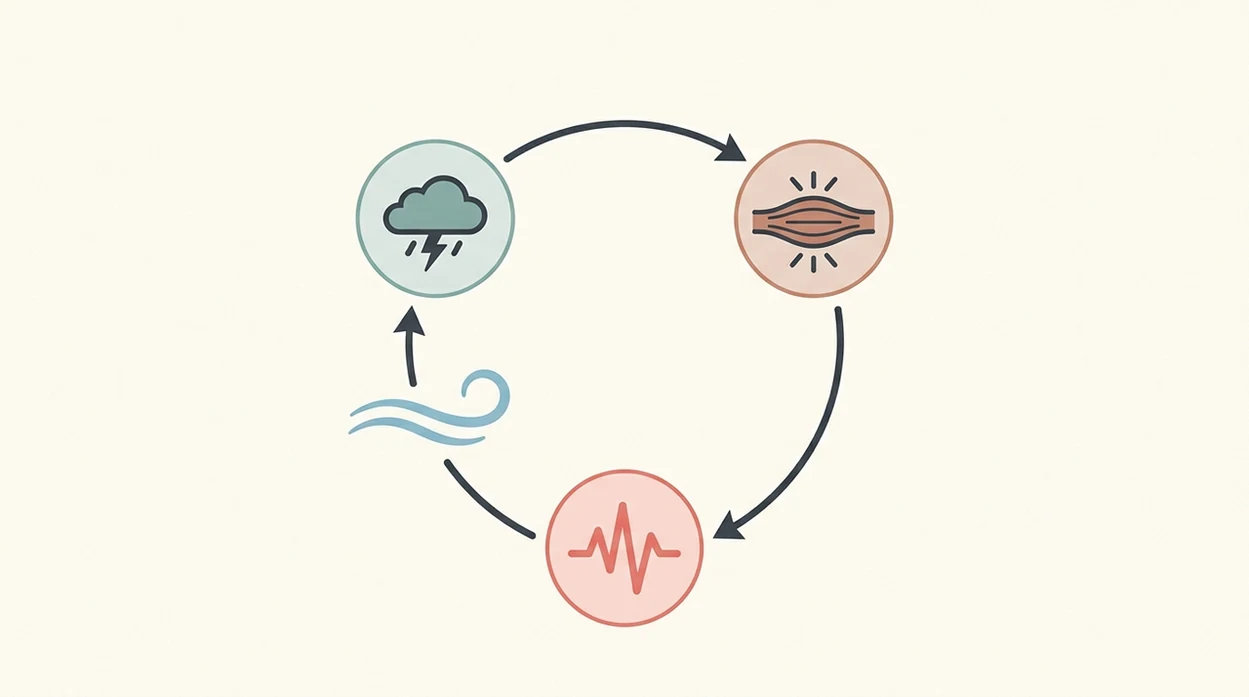
Hypnobirthing works by interrupting the fear–tension–pain cycle: fear increases muscle tension, tension can increase pain perception, and pain then reinforces fear. Slow breathing and guided relaxation aim to shift the body toward parasympathetic activation, the “safe enough for now” state.
Here is the practical version. If the shoulders lift, the jaw clamps, and the breath becomes shallow, the body receives a danger signal. Hypnobirthing asks you to exhale longer than you inhale, loosen the forehead, and let the back teeth separate. Repetition helps build a conditioned relaxation response, so the cue becomes easier to reach during labour.
A 2016 systematic review and meta-analysis found hypnosis for childbirth was associated with reduced use of pharmacological pain relief and shorter labour in some studies, but evidence quality was low to moderate and results were inconsistent source.
For many people, hypnobirthing works best when daily rehearsal turns relaxation from an idea into a familiar body cue.

Five Birth Fear Outcomes Hypnobirthing Can Support but Not Guarantee
A 2023 randomized controlled trial found that women receiving a hypnobirthing intervention reported lower fear and pain during childbirth and a more positive birth experience than controls source. That is encouraging, but it is not a promise that every labour will feel calm or manageable.
Five outcomes hypnobirthing may support:
- More calm during labour, especially when breathing has been practised before contractions begin.
- A stronger sense of control, even when plans change.
- Lower perceived pain for some women, though not pain removal.
- Possible reduced use of pharmacological pain relief, depending on the person and setting.
- More confidence in coping tools, if practice is consistent.
Tools like HypnoBirth App provide guided meditation, breathing exercises, contraction timing, and birth affirmations for daily practice. Good hypnobirthing apps deliver repeatable coping cues, not a promise that birth will follow the script.
Tokophobia, PTSD, and Medical Care Boundaries for Hypnobirthing
Hypnobirthing is not a clinical treatment for tokophobia, PTSD, depression, panic disorder, or an anxiety disorder in pregnancy. It can sit beside care, but it cannot carry the whole weight of trauma.
Clinicians typically recommend assessment and referral when fear is severe, persistent, or linked to previous traumatic experiences. For tokophobia connected to past birth trauma, sexual trauma, medical trauma, or panic attacks, CBT or trauma-focused therapy may be part of care.
Hypnobirthing also cannot prevent complications. It does not remove the possible need for induction, assisted birth, caesarean, monitoring, antibiotics, or urgent decision-making. And it does not mean you have failed if you choose an epidural.
That matters in the room.
If the monitor straps are across your bump and the plan changes, your breath practice can still help you stay present. Your medical team still guides safety, consent, and treatment options.
Four Hypnobirthing Myths About Pain, Epidurals, and Consent
Hypnobirthing myths can make fearful pregnant women feel as if they must perform calm. That pressure is not helpful, and it is not evidence-based.
| Myth | Truth |
|---|---|
| Hypnobirthing eliminates pain and guarantees an easy birth. | It may reduce fear and perceived pain for some people, but birth can still be intense, painful, or medically complex. |
| If hypnobirthing works, you will not need an epidural. | You can use breathing, affirmations, and relaxation before, during, or after choosing pain relief. |
| Tokophobia hypnobirthing means you do not need to talk to your care team. | Severe fear should be shared with a midwife, obstetrician, or perinatal mental health clinician. |
| Hypnobirthing is mind control. | You remain aware, able to ask questions, and able to give or refuse consent. |
For people comparing coping options, an app to help me stay calm during labor can be useful, but it should still fit inside a clear birth plan.
Professional Help Signals for Tokophobia and Panic Attacks
Birth fear needs professional attention when it starts changing your care, safety, or ability to function. Avoiding appointments, having panic attacks, considering termination because of fear, or feeling unable to discuss birth are signals to tell your midwife or obstetrician.
A large Danish cohort study found women with fear of childbirth had a 1.5-fold increased risk of elective caesarean section compared with women without such fear, even after adjustment source. That does not mean caesarean is wrong. It means fear deserves careful conversation, not silence.
Screening for severe birth fear can lead to referral into perinatal mental health services. You can also share your hypnobirthing preferences with your birth team, including phrases, breathing cues, and audio you may use.
The car ride after a prenatal visit can be when the truth comes out. Say the hard sentence then, if that is the only time it surfaces.
App-Based vs In-Person Tokophobia Hypnobirthing Options
App-based and in-person hypnobirthing can both support birth fear, but they solve different problems. In-person programmes usually offer more instructor feedback and have a stronger direct evidence base; app-based tools are easier to repeat in ordinary life.
| Option | Useful for | Limits |
|---|---|---|
| In-person hypnobirthing | Group support, questions, instructor correction, partner practice | Higher cost, fixed schedule, variable instructor quality |
| App-based hypnobirthing | Private practice, lower cost, 2 a.m. use, short daily sessions | Depends on motivation and has less direct research |
| Combined approach | Daily repetition plus care-team discussion | Requires planning and honest communication |
To use tokophobia hypnobirthing well:
- Tell your care team about the level of fear, not just your preferred birth plan.
- Choose one practice format you will actually repeat.
- Practise daily for 10–20 minutes, using the same breathing cue.
- Share your coping tools with your partner or support person.
- Review your plan after appointments, especially if new medical information appears.
A discreet app-based tool can support private repetition, especially when a course price screenshot is sitting in your messages and you need something you can start tonight. Keep the tool inside your care plan, not above it.
How to Use Hypnobirthing for Birth Fear
Use hypnobirthing for birth fear as a small, repeatable coping practice that sits inside your maternity care. The aim is not to force calm, but to give your body one familiar route back from panic.
- Tell your midwife or obstetrician how strong the fear feels, including whether it affects sleep, appointments, birth choices, or daily life. A number out of 10 can make the conversation easier.
- Choose one breathing cue you can remember under pressure, such as a longer exhale or softening the jaw, and practise it at the same time each day.
- Use short sessions of 10–20 minutes before labour begins, rather than waiting until contractions are intense to try a new skill.
- Share your preferences with your partner or support person, including the words that help, the audio you like, and the consent cues you want protected in the room.
- Pause practice and seek support if stillness, closed eyes, or body focus brings up panic, trauma memories, or a sense of being trapped.
Small daily rehearsal is enough to begin. Safety and support matter more than completing a track.
Limitations
Hypnobirthing is promising for birth fear, but the evidence is mixed. Studies vary in size, quality, setting, and what they call “hypnobirthing,” so results do not transfer neatly to every pregnant person.
Important limitations:
- It does not replace assessment or treatment for tokophobia, PTSD, depression, panic disorder, or other mental health conditions.
- It cannot prevent all complications or remove the need for induction, assisted birth, caesarean, or emergency care.
- Some people feel more anxious during self-hypnosis at first, especially if stillness brings up difficult memories.
- App-based hypnobirthing has far less direct research than structured in-person programmes.
- Results depend on repetition; one track during active labour may not be enough.
- Some people practise consistently and still want or need epidural pain relief.
- A soothing voice can help your body soften, but it cannot replace informed consent.
If you are worried about safety or unexpected reactions, the guide to hypnobirthing side effects explains when to pause and ask for support.
See also: Free Hypnobirthing App For Pregnancy.
Read more
- About HypnoBirth App: Calm Birth Support
- Are Hypnobirthing Apps Regulated
- Are Hypnobirthing Apps Safe
- Birth Partner Hypnobirthing App Guide
- App for Natural Birth Preparation: What to Choose
- Best Birth Meditation App for Calm Labor
- Best Contraction Timer App for iPhone: 2026 Guide
- Best Hypnobirthing App 2026: Top Picks
- Does Hypnobirthing Work for First Births? Guide
- Free Hypnobirthing App for iPhone: Calm Birth
- How to Start Hypnobirthing: Beginner Guide
- Hypnobirthing for C Section Prep: Calm Cesarean
Best Fear of Childbirth Hypnobirthing App for Calm, Guided Birth Preparation
HypnoBirth App supports fear of childbirth hypnobirthing with calming audio, breathing practice, and practical preparation tools you can use alongside your maternity care. It is free to start, trusted by 200k+ users, and ORCHA NHS certified.
Best for
- Pregnant people who feel anxious about birth and want gentle, guided coping tools
- Anyone using hypnobirthing alongside midwife, doctor, or mental health support
Limitations
- It does not replace professional medical, midwifery, or mental health care
- It cannot guarantee a specific birth experience or remove all fear
Frequently Asked Questions
What is fear of childbirth hypnobirthing?
Fear of childbirth hypnobirthing is a non-medical support approach that uses breathing, relaxation, education, visualisation, and audio practice to help reduce birth-related fear. It aims to build confidence and coping skills before and during labour. It does not replace midwife, obstetric, mental health, or emergency medical care.
Can hypnobirthing help with fear of childbirth?
Yes, hypnobirthing can help some people manage fear of childbirth by teaching calming techniques and explaining what to expect in labour. Regular practice may support a sense of control, reduce tension, and improve communication with a birth partner or care team. It is not a guaranteed treatment for severe anxiety, trauma, tokophobia, or medical complications.
Is hypnobirthing safe for pregnancy anxiety?
Yes, hypnobirthing is generally safe for pregnancy anxiety when used as relaxation and education alongside professional care. Breathing exercises, guided audio, and positive preparation can be useful coping tools for mild to moderate worry. If anxiety feels overwhelming, causes panic, affects sleep, or is linked to trauma, speak to a midwife, GP, obstetrician, or perinatal mental health professional.
Can I start hypnobirthing at 38 weeks pregnant?
Yes, you can start hypnobirthing at 38 weeks pregnant, even if you are close to your due date. Focus on simple breathing, short daily audio sessions, birth preferences, and practical coping tools rather than trying to learn everything at once. Starting earlier gives more practice time, but late preparation can still be helpful.
Does hypnobirthing work for first-time mums who are scared of labour?
Yes, hypnobirthing can be useful for first-time mums who feel scared of labour because it explains the birth process and gives practical ways to stay calm. Many first-time parents value learning what contractions may feel like, how to breathe through them, and how a birth partner can help. It should be used with antenatal care and personalised medical advice.
Can I use hypnobirthing if I want an epidural?
Yes, you can use hypnobirthing if you want an epidural. Hypnobirthing is compatible with many birth choices because the techniques can help during early labour, while waiting for pain relief, during examinations, or if plans change. Choosing an epidural does not mean you have failed at hypnobirthing.
Does hypnobirthing replace antenatal classes or medical care?
No, hypnobirthing does not replace antenatal classes, midwife appointments, obstetric care, or medical advice. It is best used as an extra preparation tool for relaxation, confidence, and coping. Always follow guidance from your healthcare team, especially if you have a high-risk pregnancy or new symptoms.
Is a hypnobirthing app as good as a hypnobirthing class?
A hypnobirthing app can be a convenient alternative or supplement to a class, but it is not exactly the same. An app offers flexible practice, guided audios, and learning at home, while a class may provide live teaching, questions, and personalised support. The best choice depends on your budget, schedule, learning style, and level of birth anxiety.
How often should I practise hypnobirthing for birth fear?
Daily practice is often the most helpful way to use hypnobirthing for birth fear. Short sessions of 10 to 20 minutes with breathing, relaxation audio, or visualisation can build familiarity and make the techniques easier to use in labour. Consistency matters more than perfect practice.
Can hypnobirthing help with tokophobia?
Hypnobirthing may help with some coping skills for tokophobia, but it is not a replacement for specialist support. Tokophobia is an intense fear of pregnancy or childbirth and may need care from a GP, midwife, obstetrician, therapist, or perinatal mental health team. Hypnobirthing can be used alongside that care if your clinician agrees it is appropriate.
What hypnobirthing techniques help when I feel panicked about birth?
Common hypnobirthing techniques for panic about birth include slow breathing, muscle relaxation, grounding, visualisation, positive cues, and listening to calming birth audio. These tools are designed to lower tension and bring attention back to the present moment. If panic is frequent, severe, or linked to past trauma, seek professional mental health support as well.
Can hypnobirthing guarantee a calm or pain-free birth?
No, hypnobirthing cannot guarantee a calm, pain-free, uncomplicated, or intervention-free birth. It can provide coping strategies, confidence, and preparation for different scenarios, including changes to your birth plan. Birth is unpredictable, so hypnobirthing works best when combined with flexible expectations and professional care.