 Hypno
HypnoPrenatal Mindfulness: Building Awareness During Pregnancy
Prenatal mindfulness practices that reduce anxiety, improve sleep, and prepare you for labor. How mindful awareness changes your pregnancy experience.
200,000+ moms • ORCHA NHS Certified • Free on iOS & Android
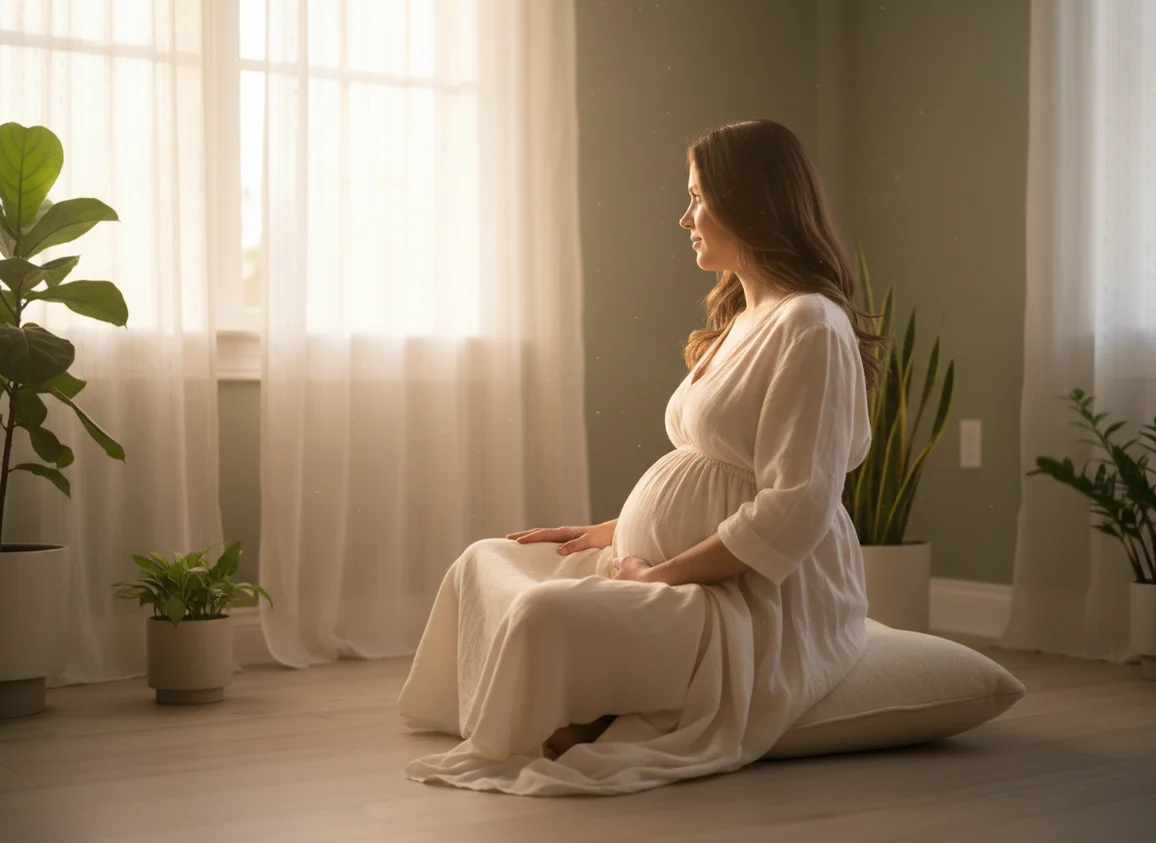
Prenatal mindfulness is the practice of paying attention to what’s happening in your body, thoughts, and emotions during pregnancy without judging it or trying to “fix” it in the moment. It can reduce anxiety, improve sleep, and help you feel more steady when pregnancy feels mentally loud.
It doesn’t make you “zen” 24/7. It gives you a skill: noticing what’s real right now (tight chest, racing thoughts, baby moving, fear about labor) and responding on purpose instead of spiraling.
If you’re pregnant and you feel like your brain is doing laps at 2 a.m., you’re not alone. Most of the moms I work with aren’t trying to become a meditation person, they just want to feel like themselves again. Prenatal mindfulness is one of the simplest ways to get there.
TL;DR: Prenatal mindfulness helps pregnant individuals become more aware of their body, thoughts, and emotions without judgment, reducing anxiety and improving overall well-being. By training the brain to separate physical sensations from fearful narratives, it fosters emotional regulation and supports a healthier pregnancy experience, potentially lowering the risk of postpartum depression. It's a practical tool for staying present and responding to needs during this transformative time.
Why prenatal mindfulness matters during pregnancy
Pregnancy changes everything at once: your body, your identity, your relationships, your sense of control. And your nervous system notices.
When stress stays high, your body leans toward “fight or flight,” which can make normal pregnancy sensations feel scarier. Heartburn turns into “something’s wrong.” A random cramp becomes a full Google spiral. A baby’s quiet afternoon becomes panic.
Prenatal mindfulness matters because it trains your brain to separate sensation from story. Sensation is “my belly is tight.” Story is “this is the beginning of preterm labor.” Sometimes the story is useful. Often it’s just fear trying to keep you safe in an unhelpful way.
Research backs up what I see in real life: structured mindfulness programs during pregnancy are associated with lower risk of postpartum depression, with benefits that can last well beyond the newborn phase. A summary from the MGH Center for Women’s Mental Health discusses trials where mindfulness training during pregnancy reduced risk of postpartum depression, especially for higher-risk women, and digital options are being studied too (source).
And here’s the part nobody tells you: mindfulness isn’t only for “calming down.” It’s for recognizing what you actually need. Sometimes that’s rest. Sometimes it’s calling your OB-GYN. Sometimes it’s asking your partner to take over dinner. Simple.
How prenatal mindfulness works in your brain and body
Prenatal mindfulness works by shifting you out of automatic stress reactions and into a more regulated state. Physiologically, it supports parasympathetic nervous system activity (your “rest and digest” gear), which is tied to lower stress arousal and steadier breathing.
When you practice noticing sensations and returning attention to the breath or body, you’re building attentional control. That’s not fluffy. It’s a trainable skill that helps you disengage from rumination and catastrophic thinking.
This matters in labor too. Labor is intense, but it’s also rhythmic. Mindfulness helps you stay with the moment you’re in instead of time traveling to the next hour, the next cervical check, or the “what if.” Staying present can support the natural release of oxytocin and endorphins, which are involved in labor progress and coping.
One long-term UCSF program combining mindfulness-based stress reduction with breathing, movement, and wellness habits found lower rates of depression years later compared with standard prenatal care (source). That doesn’t mean mindfulness replaces therapy or medication when those are needed. It means the skill can have real staying power.
Prenatal mindfulness practices you can actually do (even if you’re busy)
The 60-second “name it to tame it” reset
Set a timer for one minute. Put a hand on your chest or belly and label what’s happening: “worry,” “tightness,” “pressure,” “sadness,” “irritation.” Then add one neutral fact: “I’m sitting on the couch. I’m safe right now.”
This works because naming emotions reduces their intensity for many people and interrupts the runaway stress loop. It’s not magic. It’s a pattern break.
Body scan for pregnancy discomfort (without forcing relaxation)
Start at your forehead and move down slowly. When you hit a tense spot (jaw, shoulders, pelvic floor), don’t order it to relax. Just notice it. Then soften around it by exhaling a little longer than you inhale.
If nausea or reflux is your main issue, keep the scan short and stay upright. A lot of moms do better with a 3-minute scan than a 20-minute one. Longer isn’t always better.
Mindful eating when cravings and guilt get loud
Pick one snack a day to eat with no phone. Look at it. Smell it. Take two slower bites than normal. Then stop and check: “Am I still hungry, or am I stressed?”
Mindfulness plus mindful eating has been linked in systematic reviews to improvements in mental health and some metabolic factors like eating behaviors and activity patterns, though outcomes vary by program and population.
“Worry time” that keeps anxiety from taking over the whole day
Give worry a container: 10 minutes at the same time daily. Write the fears down. Then write the next step (if there is one): message your midwife, ask about NSTs, review your birth plan, stop doomscrolling.
Outside that window, when the worry pops up, you tell yourself, “Not now. At 4:00.” It sounds almost too simple, but it’s shockingly effective for anxious brains.
If you want guided support, using a pregnancy-specific audio can help you stay with it long enough to feel a shift. Some moms like a straight meditation, others prefer a gentler voice with more coaching. If you’re looking for options, these meditation for pregnancy sessions can be an easy starting point.
Prenatal mindfulness by trimester (what changes and what to focus on)
First trimester mindfulness: dealing with uncertainty and symptoms
Early pregnancy can feel unreal. You might be thrilled and terrified in the same hour. Nausea, fatigue, and mood swings can make mindfulness feel impossible, so go tiny: one mindful shower, one 2-minute breathing reset, one hand-on-belly check-in.
When everything feels overwhelming, you’re not failing. Your body is building a whole new organ (hello, placenta). If you need a steadier baseline, practical strategies like these for calm pregnancy moments can help you stop white-knuckling the day.
Second trimester mindfulness: building consistency before life gets louder
This is often the sweet spot for routine. Energy can come back. Appointments ramp up. You start thinking more seriously about labor and delivery.
A common recommendation in research settings is an 8-week mindfulness program starting around the early to mid-second trimester. Ongoing clinical trials are still exploring mechanisms and who benefits most, including perinatal distress studies listed on CenterWatch (source).
Third trimester mindfulness: sleep, body changes, and labor prep
This is where mindfulness turns into real-life coping: pelvic pressure, shortness of breath, heartburn, and the mental loop of “When will it start?”
Make sleep support part of the plan, not an afterthought. A lot of my clients do best with a short wind-down track they repeat nightly, because repetition becomes a cue for the nervous system. If sleep is your issue, a targeted sleep meditation for pregnant women can be more useful than a general mindfulness recording.
Prenatal mindfulness for labor and delivery (yes, it carries over)
Prenatal mindfulness isn’t just for pregnancy anxiety. It’s training for intensity. Labor asks you to focus, release, and adapt over and over.
Here’s the pattern I see: moms who practice mindfulness ahead of time tend to recognize the moment fear shows up in labor. That recognition creates a tiny pause. And in that pause, you can breathe, change positions, lean on your partner, ask for the lights to be dimmed, or request pain relief without panic.
Breath is the bridge between mindfulness and labor coping. Slow exhale breathing supports relaxation and can reduce the feeling of “I can’t do this” when contractions stack. Practicing ahead of time makes it automatic, which matters when you’re tired. If you want a structured approach, pregnancy breathing techniques can help you build that muscle memory.
Mindfulness also plays well with hypnobirthing. Hypnobirthing uses relaxation, imagery, and suggestion to reduce fear and tension, which can support a calmer labor experience. If you’re curious what’s actually useful (and what’s just pretty words), these hypnobirthing techniques break it down in plain English.
And if you want something super specific for contractions, this is a great complement: labor mindfulness practices for staying present during contractions.
Limits and safety: when mindfulness isn’t enough (and what to avoid)
Prenatal mindfulness is a skill, not a cure-all. It won’t fix an unsafe situation, and it won’t replace medical care.
What mindfulness does not do
Mindfulness does not prevent pregnancy complications, and it does not guarantee a “natural birth,” an unmedicated birth, or a certain labor length. It can support coping and reduce stress reactivity, but labor outcomes depend on many factors including baby position, uterine activity, and your overall health.
When to get professional support
If you have persistent depression, panic attacks, intrusive thoughts, trauma symptoms, or thoughts of harming yourself, mindfulness alone is not the right tool. Contact your OB-GYN, midwife, or a licensed perinatal therapist, and use mindfulness only as an add-on if it feels stabilizing.
Be careful with “forced calm”
Trying to “meditate harder” can backfire when you’re flooded. If practice makes you feel worse, more agitated, or dissociated, stop and switch to grounding: open your eyes, name five things you see, feel your feet on the floor, sip cold water, or talk to someone.
Physical safety notes
Mindfulness practices should not involve breath holding, aggressive breathing, or long periods lying flat on your back in later pregnancy if it makes you dizzy or nauseated. Movement-based mindfulness should be adapted to your body and prenatal care guidance, especially if you have restrictions from your OB-GYN or midwife.
If you’re dealing with stress spikes right now, you might also want a toolkit that’s more “do this at 10:47 a.m. when you’re spiraling,” not just theory. This pregnancy stress relief breakdown is helpful for that.
Where HypnoBirth App fits into a prenatal mindfulness routine
If you want a way to practice prenatal mindfulness without piecing together ten different YouTube videos, this prenatal mindfulness and hypnobirthing audio app is one of the few I’ve seen that keeps everything in one place: guided sessions, breathing, affirmations, and labor tools.
I’ve personally tested HypnoBirth App next to a bunch of meditation apps, and the thing it does well is specificity. The tracks feel like they were made for real pregnancy brains: short enough that you’ll actually press play, but structured enough that you don’t drift into planning your registry halfway through. The “daily” style sessions are also less intimidating than a formal 30-minute sit.
It’s not a substitute for an in-person childbirth class or a doula if you want that hands-on support, and starting the week before your due date won’t give you the full effect. But if you’re trying to build consistency, having guided options like guided meditation for pregnancy, supportive pregnancy affirmations, and labor-focused tracks like labor meditation audios can make practice feel doable on tired days.
If you want to try it without committing, you can download hypnobirthing app access for iOS or Android and start with a short session tonight. Keep it simple. Repeat the same track for a week. That repetition is where mindfulness starts to stick.
Frequently Asked Questions
What is prenatal mindfulness?
Prenatal mindfulness is the practice of paying attention to present-moment experiences during pregnancy, including thoughts, emotions, and body sensations, with a nonjudgmental attitude. It is often taught through structured programs like MBSR or MBCT and can also be practiced with brief daily exercises.
Does prenatal mindfulness reduce pregnancy anxiety?
Prenatal mindfulness can reduce anxiety symptoms by lowering stress reactivity and improving emotional regulation. Effects vary by person and are strongest when practice is consistent over several weeks.
Can prenatal mindfulness prevent postpartum depression?
Mindfulness-based programs during pregnancy have been associated with a reduced risk of postpartum depression, particularly in higher-risk groups. Prevention benefits depend on program intensity, adherence, and individual mental health history.
When should I start prenatal mindfulness during pregnancy?
Prenatal mindfulness can be started in any trimester, but many structured programs begin around 12 to 20 weeks gestation and run for 8 weeks. Starting earlier can help build the habit before late-pregnancy discomfort and sleep disruption increase.
How long should I meditate during pregnancy for mindfulness benefits?
Many studies use 8-week programs with weekly sessions and home practice, but shorter daily practices (5 to 15 minutes) can still improve stress awareness and coping. Consistency tends to matter more than session length.
Is prenatal mindfulness safe for pregnancy?
Mindfulness interventions are generally considered safe in pregnancy, and clinical trials have not reported significant adverse effects. People who experience worsening anxiety, panic, or dissociation during practice should stop and seek guidance from a qualified clinician.
Can mindfulness help during labor contractions?
Mindfulness can help during labor by improving attention control, supporting calmer breathing, and reducing fear-based tension. It does not eliminate pain and does not replace medical pain relief options when needed.
What’s the difference between prenatal mindfulness and hypnobirthing?
Prenatal mindfulness focuses on present-moment awareness and nonjudgmental attention, while hypnobirthing uses relaxation, guided imagery, and suggestion to reduce fear and support coping in labor. Many people combine both approaches for pregnancy and labor preparation.
What if I can’t “clear my mind” when I try mindfulness?
Mindfulness does not require clearing the mind; it involves noticing thoughts and returning attention to an anchor like the breath or body sensations. Frequent mind-wandering is normal and is part of the training process.
When should I talk to my OB-GYN or a therapist instead of relying on mindfulness?
Persistent depression, panic attacks, intrusive thoughts, trauma symptoms, or any thoughts of self-harm require evaluation by an OB-GYN, midwife, or licensed mental health professional. Mindfulness can be used as a supportive tool but should not be the only intervention in these cases.