 Hypno
HypnoPregnancy Relaxation App: Daily Calm for Expectant Moms
A pregnancy relaxation app with guided meditations, sleep stories, and breathing exercises. Designed specifically for the stress and anxiety of pregnancy.
200,000+ moms • ORCHA NHS Certified • Free on iOS & Android
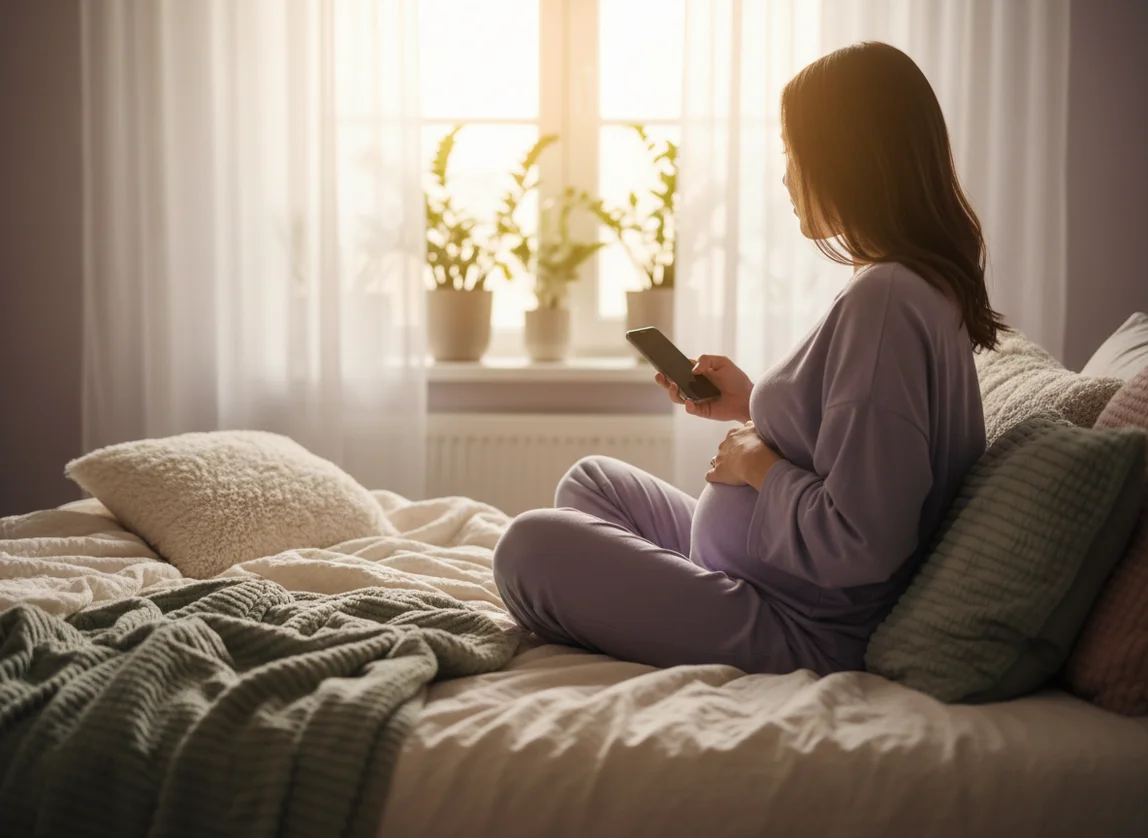
A good pregnancy relaxation app gives you daily guided calm you can actually use when your brain won’t shut off, your body feels “on,” and Google is making things worse. The simplest, most reliable approach is a mix of pregnancy-safe meditations, breathing exercises you can repeat on autopilot, and sleep support you’ll stick with.
If you want one place to practice now and then carry those same tools into labor and delivery, HypnoBirth App for pregnancy relaxation and birth prep is the app I point anxious, overwhelmed moms to most often. It’s built specifically for pregnancy and labor, not just general mindfulness with a baby sticker on it.
Here’s the truth I see every week: the moms who feel calmer aren’t “less worried.” They’re practicing the skill of switching their nervous system from stress mode to safety mode, on purpose, every day, even if it’s just 8 minutes on the couch.
TL;DR: A pregnancy relaxation app can significantly help expectant moms manage anxiety by providing guided meditations, breathing exercises, and sleep support tailored for pregnancy. Consistent use trains the body to shift from stress to a calmer state, promoting better hormonal support for birth. While not all apps are created equal, quality and regular practice can lead to noticeable improvements in mental well-being.
Why a pregnancy relaxation app helps when pregnancy anxiety spikes
Pregnancy stress isn’t just mental. It’s physical. Your heart rate ramps up, your shoulders creep to your ears, your jaw tightens, and suddenly you’re spiraling about your birth plan, your OB-GYN appointment, or that one comment your mother-in-law made.
A pregnancy relaxation app can help because it trains the “off switch” in your body: the parasympathetic nervous system. When you downshift out of fight-or-flight, your body is more likely to support the hormones that matter for birth and bonding, like oxytocin, and less likely to hang out in adrenaline all day.
What the research says (and what it doesn’t)
Mindfulness-based interventions during pregnancy show a meaningful improvement in psychological well-being, with meta-analytic findings around a moderate effect size (about d=0.48). That matches what I see in real life: consistent practice usually lowers baseline anxiety, even if it doesn’t erase it.
But pregnancy-specific mental health apps are a mixed bag. A 2025 review of perinatal mental health apps found only a small fraction had peer-reviewed evidence, and only one had moderate-quality data (JMIR Formative Research, 2025). So you’re not wrong to be picky.
The strongest recent clinical evidence is actually postpartum-focused. A multi-site trial following 642 first-time moms using the Baby2Home app found significantly fewer symptoms of stress, anxiety, and depression versus standard care (SMFM summary; also covered by MedicalXpress). The big takeaway for pregnancy: digital tools can work, but quality and consistency are everything.
What you get from a pregnancy relaxation app (the benefits moms actually notice)
Most women don’t download a pregnancy relaxation app because it sounds fun. They download it because they’re done feeling keyed up. Here’s what tends to change first.
Less “mental noise,” especially at night
I’ve watched so many first-time moms go from 2 a.m. doom-scrolling to “I put on a 10-minute track and my eyes finally got heavy.” Not perfect sleep. Just enough calm to drift off again. If sleep is your main issue, start with something pregnancy-specific like sleep meditations made for pregnant women.
A calmer body during appointments and decision-making
Whether you’re weighing an epidural, considering a doula, thinking about VBAC, or just trying to survive prenatal care without panic, relaxation practice gives you a steadier baseline. You still ask questions. You just don’t feel like you’re bracing for impact the whole time.
Breathing you can use in real moments, not just on a yoga mat
Breathwork is the fastest way to change your state in the middle of a hard moment. The best part is it travels with you: car, shower, waiting room, hospital triage. If you want a quick primer that connects daily practice to labor, this breakdown of pregnancy breathing techniques is solid.
More confidence about labor (without promising “pain-free”)
Hypnobirthing-style relaxation doesn’t guarantee an unmedicated birth. It does help you stay out of the fear-tension-pain loop, which is a real thing. When your body feels safer, you often cope better, even if you choose an epidural or need a C-section.
How to use a pregnancy relaxation app so it actually works
Most apps fail you in the same way: they rely on motivation. Pregnancy is already a lot. You need a plan that works on low energy days.
Pick a daily “anchor time” (and keep it embarrassingly small)
Choose one time you already have a habit: right after brushing your teeth, after lunch, or the moment you get into bed. Then start with 7 to 12 minutes. Short wins build consistency.
If you want guided tracks that match where you are right now, use a library that’s organized by trimester and symptoms, like guided meditation for pregnancy by trimester.
Use a 3-step reset for sudden anxiety
When anxiety hits out of nowhere, do this:
1) Exhale longer than you inhale for 5 breaths.
2) Drop your shoulders and unclench your jaw (seriously, check your tongue).
3) Play one short track or repeat a single calming phrase.
On the days you feel extra overwhelmed, this kind of calm pregnancy support helps you stop negotiating with your nervous system and just give it a script.
Bring your partner in, but keep it simple
Your birth partner doesn’t need to be a meditation person. They just need to know what helps you. I usually suggest one shared session a week and one “cue” phrase they can say in labor like, “Loose jaw, slow breath.” That’s it. Simple.
Breathing exercises for pregnancy and labor (what actually transfers to the delivery room)
Some relaxation content feels nice but doesn’t translate to contractions. The most useful pregnancy relaxation apps teach breath patterns that work when things get intense.
Down-breathing for early labor and prenatal stress
This is slower, deeper breathing with longer exhales. It supports relaxation, reduces muscle guarding, and helps your body conserve energy. If you want audio coaching built specifically for this, a focused labor breathing app approach is easier than trying to remember techniques from a class handout.
“Release” cues that stop you from fighting contractions
In my experience, the biggest shift happens when moms stop tensing against the surge and start softening their face, throat, and pelvic floor. That sounds abstract until you practice it with audio. Then it clicks.
If you want a deeper dive into which tools hold up during active labor, read this overview of hypnobirthing techniques that work in labor.
Sleep stories, affirmations, and guided tracks: what to choose inside a pregnancy relaxation app
Not all “relaxation” content hits the same. Here’s what I recommend based on what moms tell me they actually replay.
Sleep stories when your mind won’t stop
Look for sleep tracks that acknowledge pregnancy discomfort and racing thoughts, not just generic beach imagery. If a voice annoys you, switch. That matters more than you think.
Affirmations when you’re stuck in fear loops
Affirmations aren’t magic. They’re mental reps. The point is to interrupt catastrophic thinking with language your brain can accept.
If you like having phrases ready to go, these pregnancy affirmations for daily mindset are a good starting point, and for labor-specific statements, hypnobirthing affirmations tend to land better when contractions start.
Labor-focused meditation you can practice ahead of time
Listening once during labor is not the move. Practice the same track for a couple weeks so your body recognizes it quickly. For example, rotating a labor meditation audio with a hypnobirthing meditation session helps you build that “drop in fast” response.
Honest limitations of any pregnancy relaxation app
Apps can help a lot. They’re not a replacement for medical care, therapy, or an in-person support system when you really need one.
Consistency matters. Hypnobirthing-style relaxation works best when you practice for at least 4 to 6 weeks before your due date. Starting in the last week can still help with sleep and anxiety, but it won’t build the same conditioned response.
Some anxiety needs more than meditation. If you’re having panic attacks, intrusive thoughts, or symptoms of depression, talk with your OB-GYN or midwife. A pregnancy relaxation app can be supportive alongside treatment, but it shouldn’t be your only tool.
Not every voice, style, or script fits every person. If an app’s tone makes you cringe, you won’t use it. That’s not you failing. That’s a mismatch.
How HypnoBirth App fits as a pregnancy relaxation app (without the fluff)
HypnoBirth App is one of the few apps I’ve seen moms stick with because it’s practical. You get guided hypnobirthing audio, trimester-based pregnancy meditations, breathing exercises, and labor tools in the same place, so you’re not bouncing between five apps when you’re already overstimulated.
I also like that it’s built around the realities of labor and delivery. When I tested it against other popular options, the HypnoBirth tracks felt more “birth room” and less “spa day.” That’s a good thing when you’re preparing for contractions, hospital lights, or the unpredictability of a midwife shift change at 2 a.m.
It also helps that it’s ORCHA certified for health app quality. That doesn’t mean it’s a medical device, but it does signal the app has been reviewed for things like safety, privacy, and usability. If you’re deciding between options, this honest rundown of the best hypnobirthing app comparisons can help you sort features without falling into marketing traps.
Tools you’ll use during labor, not just during pregnancy
When contractions start, you want fewer decisions. HypnoBirth includes a contraction timer with meditation support, plus on-the-spot audio you can play in early labor, active labor, and pushing. For a lot of couples, having it bundled like a labor and delivery app reduces the “What do we do now?” energy.
If you prefer learning like a class (but on your schedule)
Some moms want a structured program, not a giant library. If that’s you, the app-based approach to a hypnobirthing course online can feel more doable than a weekly class when you’re juggling nausea, work, or childcare. And if you’re deciding between app learning and traditional classes, this breakdown of hypnobirthing online vs. in-person classes lays out the real tradeoffs.
Real-world extras that reduce day-to-day worry
Little features matter when you’re already anxious. A kick counter can be reassuring between appointments, and having quick access to calming tracks helps when you’re stuck in traffic or waiting for your glucose test results.
If you want to see how real users describe it, check out these HypnoBirth App reviews. And if you want to try it without overthinking it, you can download the hypnobirthing app free on iOS and Android.
Frequently Asked Questions
Is there a mindfulness app for pregnancy?
Yes, several apps offer pregnancy-focused mindfulness and meditation content, including options designed specifically for trimester changes, sleep, and birth preparation. Pregnancy-specific apps may be easier to use consistently because the sessions match common symptoms and concerns.
What is the breathwork app for pregnancy?
A breathwork app for pregnancy provides guided breathing exercises that support relaxation and can be practiced during pregnancy and used in labor. Breathwork is generally low risk, but anyone with medical complications should confirm safety with their OB-GYN or midwife.
How do I relax my body during pregnancy quickly?
A fast method is slow breathing with longer exhales, relaxing the jaw and shoulders, and using a short guided meditation or body scan for 5 to 10 minutes. Consistent daily practice typically produces stronger results than occasional longer sessions.
Do pregnancy meditation apps actually reduce anxiety?
Mindfulness-based interventions during pregnancy are associated with moderate improvements in psychological well-being and reductions in stress and anxiety symptoms for many users. Individual outcomes vary based on frequency of practice and baseline anxiety severity.
When should I start using a pregnancy relaxation app?
A pregnancy relaxation app can be started at any trimester, but starting earlier allows more time to build a consistent habit. For labor-focused hypnobirthing content, many users practice for at least 4 to 6 weeks before their due date.
Can I use a pregnancy relaxation app during labor?
Yes, many apps include labor meditations, breathing cues, and timers that can be used during contractions. Audio tools work best when practiced in advance so the body associates the guidance with relaxation.
Are pregnancy sleep meditations safe?
Pregnancy sleep meditations are generally safe for most people and focus on relaxation and sleep support. Users should avoid any practice that causes dizziness or distress and should discuss persistent insomnia or anxiety with a healthcare professional.
Is hypnobirthing the same as mindfulness meditation?
Hypnobirthing and mindfulness both use focused attention and relaxation, but hypnobirthing typically adds birth-specific suggestion, imagery, and conditioning for labor coping. Both approaches may be used together depending on user preference.
What should I look for in a pregnancy relaxation app?
A strong pregnancy relaxation app offers pregnancy-specific content, clear guidance for breathing, and sessions that fit real schedules (often 5 to 20 minutes). Evidence of professional oversight, transparent privacy practices, and quality certification can help with decision-making.
Can a pregnancy relaxation app replace therapy or medical care?
No, a pregnancy relaxation app is a supportive wellness tool and does not replace therapy, prenatal care, or treatment for anxiety or depression. Anyone with severe symptoms, panic attacks, or safety concerns should contact their OB-GYN, midwife, or a licensed mental health professional.