 Hypno
HypnoWhat Is a Hypnobirthing App and How Does It Actually Work
200,000+ moms • ORCHA NHS Certified • Free on iOS & Android
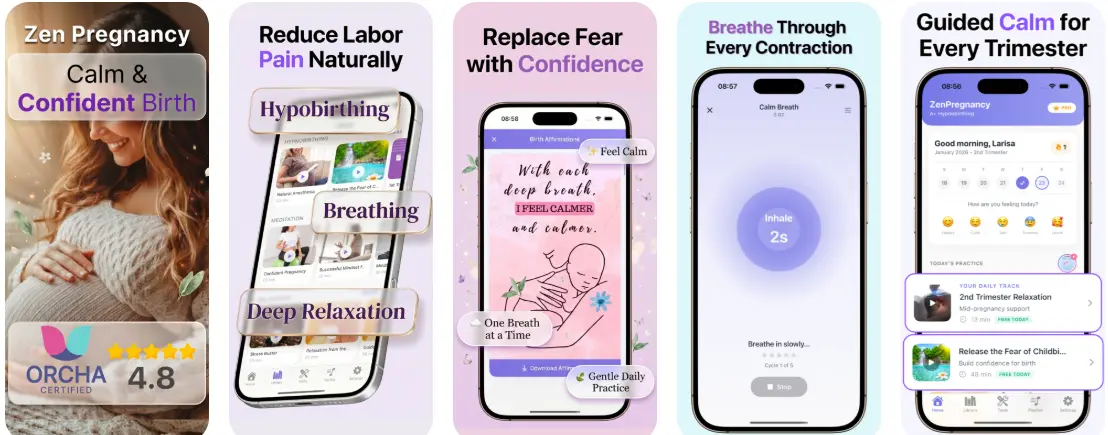
If you're asking what is a hypnobirthing app, it's a mobile tool that delivers guided relaxation, breathing exercises, birth affirmations, and contraction timing to help pregnant women prepare for a calmer labor and birth. Unlike a standalone contraction timer or a full in-person course, it combines audio coaching, visualization tracks, and daily practice prompts in one place on your phone.
Definition: A hypnobirthing app is a mobile application that provides guided meditation, breathing exercises, contraction timing, and birth affirmations to help pregnant women practice deep relaxation techniques for labor and birth.
TL;DR
- A hypnobirthing app puts relaxation, breathing, affirmation, and surge-timing tools on your phone for daily pregnancy practice.
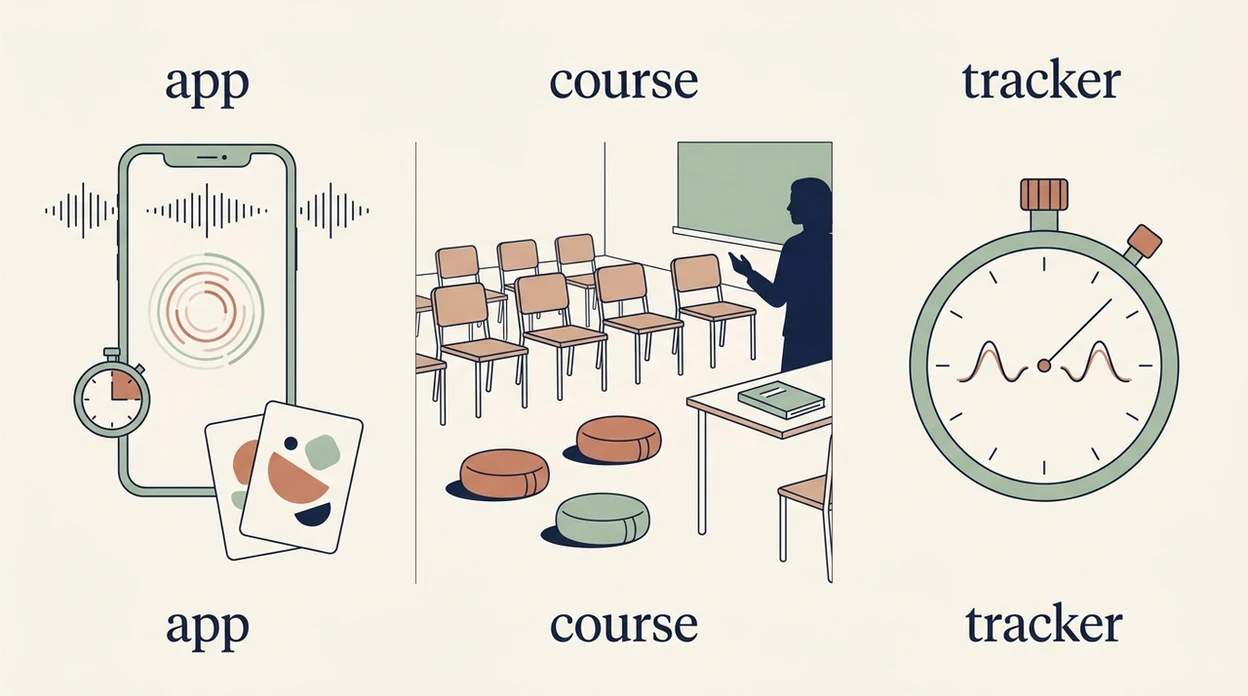
- It differs from a full hypnobirthing course, which has more partner prep and live support, and from a basic contraction tracker, which does not teach relaxation.
- Regular practice during pregnancy is what makes the techniques effective in labor. Downloading alone is not enough.
- Hypnobirthing apps work with many birth plans, including epidurals, inductions, and cesareans.
- Evidence for hypnosis-based relaxation in labor is promising but still limited, so apps complement rather than replace medical care.
Hypnobirthing App Meaning: A Clear Definition
A hypnobirthing app is a mobile application that provides guided meditation, breathing exercises, contraction timing, and birth affirmations to help pregnant women practice deep relaxation techniques for labor and birth.
In plain terms, hypnobirthing does not mean mind control, sleep, or being unaware. It means practicing a calm, focused state so your body has a familiar pattern to return to during contractions. You can still hear your nurse, answer questions, change positions, and ask for what you need.
Most apps are built around four pillars: audio meditations, breathing prompts, affirmation tracks or cards, and a contraction timer. Some also include sleep sessions, birth education snippets, and reminders.
The useful part starts before labor. A ten-minute session between meetings, or a breathing track before bed, gives the body repetitions. Labor is not the first rehearsal.
5 Facts Every Pregnant Woman Should Know About Hypnobirthing Apps
- A hypnobirthing app delivers birth preparation through your phone. It brings relaxation, visualization, breathing, and affirmation practice into short digital sessions instead of a scheduled in-person class.
- Practice matters more than the download. The techniques work best when they feel boringly familiar by labor day, like reaching for a straw cup between contractions without needing a discussion.
- Apps support, but do not replace, your birth team. You still need childbirth education, clinical care, and a plan for asking questions when choices come up.
- The timer is only one piece. A hypnobirthing app usually combines contraction timing with audio coaching, which makes it different from a basic tracker that only counts minutes.
- You stay awake and in control. Hypnobirthing means guided deep relaxation, not unconsciousness. For a deeper evidence discussion, the question does hypnobirthing work depends partly on practice, expectations, and the type of support used.
How a Hypnobirthing App Works: Relaxation Science Behind the Screen
A hypnobirthing app works by pairing repeated cues, such as a breathing pattern, calm voice, or affirmation, with a practiced relaxation response. Over time, that cue can help the body settle faster because the brain has rehearsed the pattern many times.
The technical term is a conditioned relaxation response. In everyday language, your body learns, “when this sound starts, soften the jaw, drop the shoulders, slow the breath.” Slow breathing can also support parasympathetic nervous system activity, the rest-and-digest side of the body’s stress system.
Audio tracks often borrow from clinical hypnosis methods: steady pacing, progressive muscle release, imagery, and repeated phrases. A good script leaves room for awareness. You still notice the monitor belts, the bed rail, and the nurse coming in.
A 2020 Cochrane review of 9 trials found antenatal hypnosis was linked with a small reduction in pharmacological pain relief, though evidence quality was low to moderate source. A review hosted by the NIH’s National Center for Complementary and Integrative Health notes that relaxation techniques may help some people manage pain and stress, but effects vary and evidence quality differs by technique source.

Core Features Inside a Hypnobirthing App
A well-built hypnobirthing app combines audio, breathing, affirmations, timing, reminders, and offline access. Good hypnobirthing apps deliver repeatable labor coping cues, not a promise that birth will feel painless or fully controllable.
Audio Tracks and Guided Meditations
Expect hypnosis-style relaxations, pregnancy meditation, sleep tracks, and short grounding sessions. The voice matters. If it irritates you at 34 weeks, it probably won't comfort you at 4 centimeters.
Breathing Exercises and Surge Timer
Common tools include calm breathing, surge breathing, and a contraction timer with real-time prompts. That ping in early labor can help a birth partner stop guessing and start watching the pattern.
Affirmations and Daily Practice Tools
Affirmation libraries may appear as audio, visual cards, or lock-screen reminders. Daily nudges, progress tracking, and offline tracks help when hospital Wi-Fi is patchy. The broader hypnobirthing vs meditation difference is that hypnobirthing tools are built around labor cues, not general calm alone.
How to Use a Hypnobirthing App During Pregnancy
Use a hypnobirthing app as a rehearsal tool, not something you save for the first hard contraction. The aim is to make one or two cues feel familiar enough that your body recognizes them when labor gets noisy.
- Choose one short relaxation track and play it several times a week, ideally at a boring, repeatable time like before sleep or after lunch. Ten minutes done often is more useful than a long session you avoid.
- Practice the same breathing cue until it feels almost automatic. You should not need to scroll, count, or debate the technique when a surge starts.
- Download your favorite labor tracks for offline use before your due date. Hospital Wi-Fi, low signal, and a half-charged phone are not things to troubleshoot at 3 a.m.
- Use the contraction timer once surges form a clear pattern, rather than timing every twinge for hours. Early labor can be long, and constant tracking may make it feel longer.
- Ask your birth partner to learn the prompts, volume controls, and timer screen ahead of time. In labor, they may be the one pressing play while you keep your eyes closed.
Hypnobirthing App vs Full Course vs Contraction Tracker
A hypnobirthing app sits between a full course and a basic contraction tracker. It gives portable practice, but it usually cannot match the depth of live instruction.
| Option | What it usually includes | Strength | Main tradeoff |
|---|---|---|---|
| Full hypnobirthing course | Partner prep, live Q&A, longer education modules, practice scripts | More guided learning and feedback | Higher cost and time commitment |
| Hypnobirthing app | Audio tracks, breathing prompts, affirmations, timer, reminders | Self-paced, portable, often lower cost | Less partner coaching and no live support |
| Contraction tracker | Start-stop timing, interval length, contraction duration | Simple pattern tracking | No relaxation training or audio coaching |
Many women use an app alongside a course. Others use one as a standalone tool because childcare, shift work, or cost makes classes hard.
Quality varies, though. Not every app is written or reviewed by qualified birth educators or clinicians, so the hypnobirthing app vs course choice should include content quality, not just price.
4 Named Hypnobirthing App Examples
Hypnobirthing apps are not one-size-fits-all. Match the voice, features, and philosophy to your birth preferences, your beliefs, and the way your partner actually helps under pressure.
- HypnoBirth App: Combines guided meditation, breathing exercises, contraction timing, and affirmations in one app. This setup can suit someone who wants phone-based practice without piecing together four separate tools.
- GentleBirth: Blends mindfulness, hypnobirthing, and sports-psychology ideas. It may fit users who like mindset training as much as birth-specific scripts.
- Freya: Acts more like a virtual birth partner, coaching through surges in real time. That can be useful when a partner is busy pressing tennis balls into a lower back.
- Christian Hypnobirthing: Uses faith-based relaxation scripts and prayer integration. For some families, that language feels grounding; for others, it won't fit.
Other pregnancy-relaxation tools may appear in app-store searches, but the feature mix matters more than the label.
Birth Plans Where a Hypnobirthing App Helps or Falls Short
A hypnobirthing app can support unmedicated birth, epidural birth, induction, planned cesarean, or a plan that changes halfway through. The most common medically supported way to manage labor pain is flexible, combining clinical options with non-drug comfort measures when appropriate.
It tends to help most when started in the second trimester and practiced regularly. By labor, the goal is not to learn a new skill. It is to press play and recognize the pattern.
Per the CDC, about 61% of U.S. women having vaginal births use epidural or spinal anesthesia source. That means many families are already blending medical pain relief with breathing, positioning, counterpressure, and calm-room choices. In one randomized trial of 680 women, epidural use was 27.9% with antenatal hypnosis training, compared with 30.3% with usual care and 34.6% with relaxation training source.
A hypnobirthing app falls short when someone needs monitoring, emergency care, or mental health support. Trauma history matters too. Choose language that respects boundaries, especially for hypnobirthing for hospital birth.
When to Contact Your Maternity Care Team
Contact your maternity care team whenever symptoms feel urgent, unusual, or outside the plan they gave you. A hypnobirthing app can help you breathe through uncertainty, but it cannot tell whether you or your baby needs clinical assessment.
Use the app as comfort support while you follow your local triage instructions. Different hospitals and midwifery teams give different advice about when to come in, especially for contraction spacing, waters breaking, previous cesarean birth, or higher-risk pregnancies.
- Call promptly for bleeding, fever, reduced fetal movement, severe pain, or a headache or visual symptoms that worry you.
- Ask for guidance if contractions start before term, if you think your waters have broken, or if fluid is leaking suddenly or steadily.
- Follow your local timing advice for contractions rather than relying only on an app’s automatic “go to hospital” prompt.
- Keep timing surges if it helps, but notice the whole picture: movement, fluid, bleeding, pain level, and how you feel between contractions.
- Treat breathing tracks, affirmations, and relaxation cues as supportive tools while a clinician, midwife, or triage nurse handles medical decisions.
Limitations
Hypnobirthing apps are useful practice tools, but they have real limits. Clinicians typically recommend using relaxation and breathing as supportive comfort measures, not as replacements for medical assessment or emergency care.
- Evidence for hypnobirthing is promising but mixed. Apps should not promise pain elimination, fewer interventions, or a specific birth outcome.
- A phone cannot monitor fetal heart rate, maternal blood pressure, bleeding, fever, or labor complications.
- Pressing play for the first time in active labor is unlikely to give the same benefit as weeks of practice.
- Content quality varies. Some apps are educator-led or clinician-reviewed; others do not clearly name their sources.
- Some users dislike hypnosis-style wording, especially if they have trauma history, certain mental health conditions, or religious concerns.
- Audio can become annoying in hard labor. Sometimes the better support is silence, a hip squeeze, or changing positions.
- A 2012 Cochrane review found relaxation and mind-body practices may reduce anxiety and improve birth experience scores, but the evidence remains limited.
Small tools help. They are not the whole birth plan.
See also: When Does Hypnobirthing Get Easier.
Read more
- About HypnoBirth App: Calm Birth Support
- Are Hypnobirthing Apps Regulated
- Are Hypnobirthing Apps Safe
- Birth Partner Hypnobirthing App Guide
- App for Natural Birth Preparation: What to Choose
- Best Birth Meditation App for Calm Labor
- Best Contraction Timer App for iPhone: 2026 Guide
- Best Hypnobirthing App 2026: Top Picks
- Does Hypnobirthing Work for First Births? Guide
- Free Hypnobirthing App for iPhone: Calm Birth
- How to Start Hypnobirthing: Beginner Guide
- Hypnobirthing for C Section Prep: Calm Cesarean
Best Hypnobirthing App for Understanding How Birth Preparation Works
HypnoBirth App brings key hypnobirthing tools into one simple place, including guided audio, breathing practice, affirmations, and birth-focused relaxation. It is free to use, trusted by 200k+ users, and ORCHA NHS certified, making it a practical option if you want to explore hypnobirthing from home.
Best for
- Learning how hypnobirthing techniques fit together
- Practising breathing, relaxation, and positive birth preparation
Limitations
- It does not replace personalised medical advice or antenatal care
- Results and preferences vary, so some users may still prefer in-person classes
Frequently Asked Questions
What is a hypnobirthing app?
A hypnobirthing app is a mobile tool that helps you practise relaxation, breathing, visualisation and positive birth preparation. It usually includes guided audio tracks, affirmations, timers, reminders and short lessons you can use during pregnancy and labour. It is designed to support confidence and calm, not to guarantee a specific type of birth.
How does a hypnobirthing app actually work?
A hypnobirthing app works by guiding you through repeated practice of calming techniques so they feel familiar by the time labour starts. Audio sessions, breathing cues and affirmations help train your body to relax and your mind to focus. Regular practice can make it easier to use those tools during contractions, hospital appointments or moments of anxiety.
Can I start using a hypnobirthing app at 38 weeks pregnant?
Yes, you can start using a hypnobirthing app at 38 weeks pregnant. Even a short period of daily listening, breathing practice and birth planning can help you feel more prepared before labour. Choose the simplest tracks first, such as relaxation, breathing for contractions and positive affirmations.
Is a hypnobirthing app helpful for pregnancy anxiety?
Yes, a hypnobirthing app can help some people manage pregnancy anxiety by offering calming audio, breathing exercises and reassurance. These tools can support relaxation and give you something practical to do when worries increase. If anxiety feels severe, persistent or affects daily life, speak to your midwife, GP or mental health professional.
Can I use a hypnobirthing app if I plan to have an epidural?
Yes, you can use a hypnobirthing app if you plan to have an epidural. Hypnobirthing techniques can support calm decision-making, breathing, rest and communication before, during and after pain relief. The app does not replace medical advice, but it can work alongside your chosen birth preferences.
Is a hypnobirthing app good for first-time mums?
Yes, a hypnobirthing app can be especially useful for first-time mums who want a clear introduction to birth preparation. It can explain practical techniques in small steps and help you build confidence through repetition. Many first-time parents use it to feel more informed before antenatal classes, appointments or labour.
Is a hypnobirthing app better than a hypnobirthing class?
A hypnobirthing app is not always better than a class; it is a more flexible option for practising at home. An app is useful if you want on-demand audio, reminders and shorter sessions, while a class may offer live teaching, partner practice and personalised questions. Many parents use both, depending on budget, schedule and learning style.
What features should I look for in a hypnobirthing app?
A good hypnobirthing app should include guided relaxations, breathing exercises, affirmations and practical birth preparation tools. Helpful extras include a contraction timer, partner prompts, offline listening, sleep tracks and content for different birth preferences. Look for clear, evidence-informed language that supports choice rather than promising a perfect birth.
How often should I use a hypnobirthing app during pregnancy?
Daily or near-daily practice is usually the most helpful way to use a hypnobirthing app. Short sessions of 10 to 20 minutes can build familiarity without feeling overwhelming. If daily practice is unrealistic, using the app several times a week is still worthwhile.
Can I use a hypnobirthing app during labour?
Yes, you can use a hypnobirthing app during labour if it feels helpful and safe to do so. Many people play relaxation tracks, use breathing prompts or time contractions through the app. Keep your birth partner and midwife informed, and follow medical guidance if your situation changes.
Does a hypnobirthing app reduce labour pain?
A hypnobirthing app does not guarantee reduced labour pain. It can help you practise relaxation, breathing and focus, which may change how you cope with sensations during labour. Pain relief choices are personal, and you can use hypnobirthing alongside medical options such as gas and air or an epidural.
Is a hypnobirthing app safe to use in pregnancy?
Yes, a hypnobirthing app is generally safe to use in pregnancy for relaxation and education. Use it while resting, not while driving or doing anything that requires full attention, especially with deep relaxation tracks. Always contact your midwife or doctor with concerns about symptoms, your baby’s movements or your birth plan.