 Hypno
HypnoWhat Happens When You Practice Hypnobirthing Daily
200,000+ moms • ORCHA NHS Certified • Free on iOS & Android
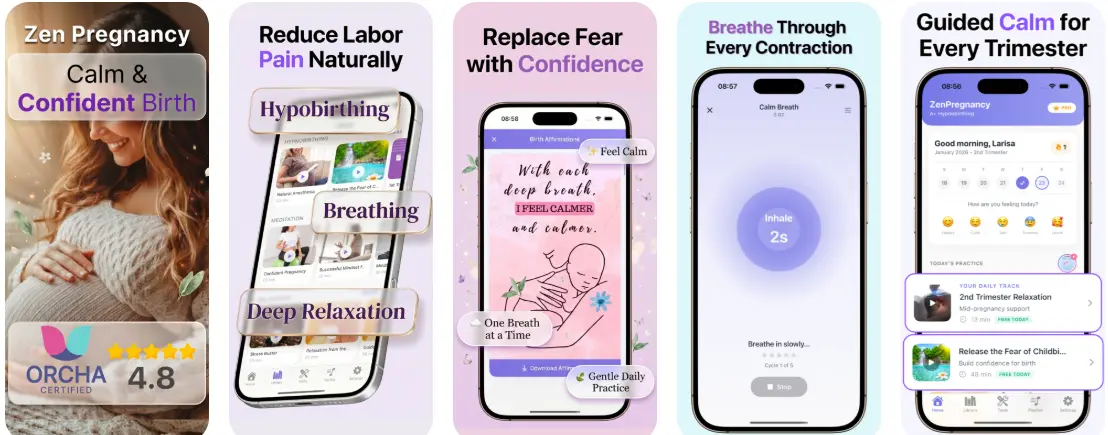
What happens when you practice hypnobirthing is that repetition trains your body to enter a calmer, more focused state faster, so you have rehearsed breathing, relaxation cues, and coping tools before labour begins. The effects usually build over weeks of daily practice, not from one recording near your due date. Daily hypnobirthing results can include better sleep, lower anxiety, and more confidence, but they do not guarantee a pain-free or intervention-free birth.
This article is educational antenatal preparation, not medical advice. Contact your midwife, OB-GYN, or local maternity triage service for reduced fetal movement, bleeding, severe pain, suspected labour complications, or any symptom that worries you.
> Definition: Hypnobirthing is a structured antenatal preparation method that uses guided audio, breathing exercises, visualisation, and positive affirmations to train a conditioned relaxation response you can activate during labour.
TL;DR
- Daily practice, usually 10 to 30 minutes, builds a trained relaxation reflex you can trigger under stress, including during contractions.
- Reported hypnobirthing practice effects include better sleep, lower anxiety, and increased confidence, not guaranteed pain-free birth.
- Research shows modest benefits for coping satisfaction but mixed evidence on hard outcomes like epidural or caesarean rates.
- Hypnobirthing works alongside epidurals, inductions, and caesareans. It does not replace medical care.
- App-based sessions work best when you pair short daily listens with occasional longer labour rehearsals; the recording is a cue, not a guarantee.
Daily Hypnobirthing Practice Components
Daily hypnobirthing practice is a short, repeated antenatal routine using guided audio, breathing techniques, birth affirmations, and visualisation to rehearse calm before labour. A typical practice session lasts 10 to 30 minutes and sits alongside midwife appointments, antenatal classes, scans, and medical advice.
The difference is structure. Occasional listening might feel soothing, but daily repetition teaches your body a familiar sequence: hear the guided track, soften your shoulders, slow the release breath, and picture the birth environment. After enough repetitions, the cue starts to feel automatic.
I often suggest a simple starting point: one 12-minute relaxation track with one earbud in while lying on your left side. Not fancy. Just repeatable.
For many people, a short daily session is easier to maintain than a long course video. Good apps deliver repeatable guided practice and birth-specific cues, not a promise that labour will follow a script.
Before You Start Practicing Hypnobirthing
Before you start practicing hypnobirthing, treat it as a support skill for pregnancy and birth, not a replacement for antenatal care, clinical advice, or urgent assessment. Set up the practice so it is safe, repeatable, and comfortable enough to use often.
- Confirm your medical baseline. Keep your midwife or OB-GYN appointments, follow individual advice, and use hypnobirthing alongside your birth plan rather than instead of professional guidance.
- Choose a simple practice setup. Pick a quiet time, a comfortable position, headphones if they help you settle, and one repeatable cue such as the same track, phrase, scent, or hand position.
- Invite your birth partner into one small role. Ask them to learn your anchor phrase, match your slow breathing pace, and use one agreed touch cue, such as a steady hand on your shoulder.
- Avoid unsafe practice moments. Do not listen while driving, bathing alone, cooking, walking near traffic, or doing anything where drowsiness or reduced alertness could put you at risk.
- Adjust your position as pregnancy changes. Use pillows, side-lying, upright sitting, or a supported forward lean if pelvic pain, reflux, dizziness, or late-pregnancy discomfort makes lying flat feel wrong.
Five Key Facts About Daily Hypnobirthing Results
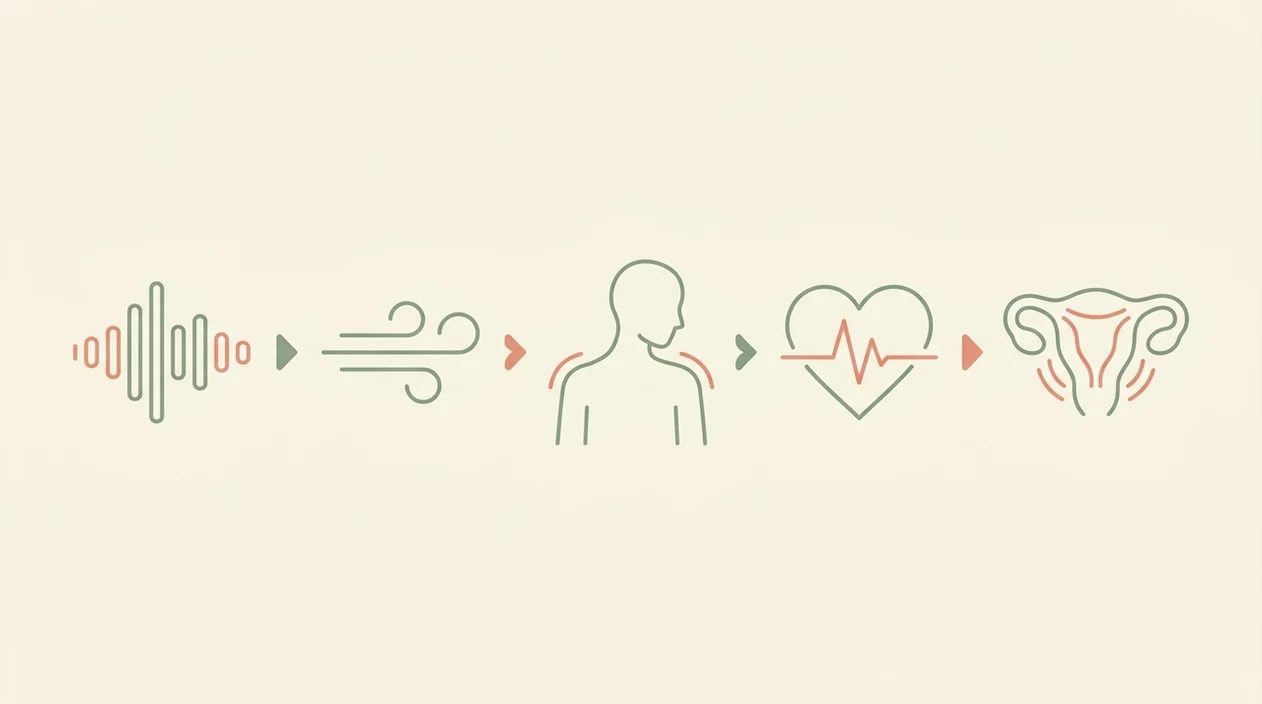
Daily hypnobirthing results are mostly about trained coping, not controlling every part of birth. The useful changes tend to show up first in your breathing, sleep, anxiety level, and confidence.
- Hypnobirthing trains a rest-and-digest response. Repeated relaxation practice encourages parasympathetic activation, which is the body state linked with slower breathing, softer muscles, and feeling safer.
- Consistency creates the effect. Listening twice at 39 weeks rarely builds the same conditioned response as daily repetition from around 28 weeks.
- Research supports coping benefits more than guaranteed outcomes. Studies suggest reduced fear and improved sense of control, but birth mode and pain relief findings are mixed.
- Common reports are subjective but meaningful. Many people notice better sleep, less anxiety, more confidence, and steadier breathing during contractions.
- Hypnobirthing can fit any birth plan. It can be used with epidurals, inductions, planned caesareans, emergency caesareans, and other medical support.
For anxious evenings, pairing hypnobirthing with pregnancy anxiety meditation can make the practice feel less like homework and more like a nightly reset.

Hypnobirthing Relaxation Response Mechanism
Hypnobirthing works through classical conditioning: you pair a guided voice, breathing pattern, touch anchor, and visual image with deep relaxation until the cue starts to trigger the state. In plain language, your body learns, “When this track starts, I know what to do.”
The method also targets the fear-tension-pain cycle. Fear can make muscles tighten and breathing become shallow. That tension may make contractions feel harder to cope with. Hypnobirthing aims to interrupt the loop by slowing the breath, unclenching the tongue from the roof of the mouth, and dropping the shoulders away from the ears.
This is the “how hypnobirthing works” mechanism: repeated cues strengthen neural pathways, so calm becomes easier to access under pressure. Parasympathetic activation may support slower heart rate, muscle release, and the hormonal conditions that help labour progress.
Some people do not respond strongly to guided imagery or hypnosis. That is not a character flaw. It just means you may need different coping tools alongside the practice.
Six-Step Daily Hypnobirthing Practice Routine
Here is how to use hypnobirthing as a daily phone-based routine. If you use HypnoBirth App, treat it as the container for the routine, not as medical advice; the benefit still depends on repetition.
- Set a consistent daily time. Choose after brushing teeth, before bed, or another cue you already do every day.
- Start with a 10-minute guided breathing session. Keep it short enough that you will actually press play.
- Add affirmation tracks on alternate days. Use one birth affirmation as an anchor phrase during the day.
- Practise a longer visualisation session once or twice weekly. Aim for 20 to 30 minutes when you are not rushing.
- Run a monthly labour dress rehearsal from 28 weeks. Try positions, breathing, partner cues, and a longer guided track together.
- Review your routine as your due date approaches. Keep what calms you quickly and drop what feels forced.
One client once messaged after a week of short sessions: “I know what to do with my breath now.” That is the point. Not performance. Familiarity.
Clinical Research on Hypnobirthing Practice Effects
Clinical research on hypnobirthing practice effects suggests modest benefits for coping, fear, and satisfaction, but mixed findings for epidural use, caesarean rates, and labour outcomes. Clinicians typically recommend using hypnobirthing as a preparation and coping tool, not as a substitute for medical care or flexible pain-relief planning.
A 2016 Cochrane review of hypnosis for labour pain included 9 trials and 2,954 women. It found reduced use of pharmacological pain relief and regional anaesthesia in some studies, but judged the overall evidence low to very low quality source. That matters. Low-quality evidence means results should be read carefully.
Epidural and Intervention Rates in Clinical Trials
In a randomized controlled trial of 1,222 first-time mothers, epidural use was 27.9% in the hypnosis education group versus 30.3% in the control group, with no significant difference in overall mode of birth source. A Norwegian trial also found no significant reduction in epidural or emergency caesarean rates source.
Self-Reported Anxiety and Birth Satisfaction
A UK feasibility trial found a small reduction in self-reported anxiety about labour source. Some trials reported better satisfaction with pain relief, but results were inconsistent. For most people, hypnobirthing is more defensible as coping practice than outcome control.
Everyday Hypnobirthing Effects During Pregnancy
Everyday hypnobirthing effects often appear before labour: falling asleep faster, feeling less reactive, and having clearer conversations about birth preferences. These pregnancy-period changes can matter as much as labour-day results because they affect weeks of daily life.
Night practice is where many people notice it first. Baby kicks under the duvet, your mind starts listing every appointment, and the guided track gives your body one job: breathe out slowly. If nighttime anxiety is the main issue, an app to help pregnancy anxiety at night can support the same routine.
Partners can help too. When they join a session, they learn the anchor phrase, the touch cue, and the pace of your release breath. That makes birth conversations less abstract.
For pregnant people who feel overwhelmed, daily hypnobirthing practice is often easier than occasional long lessons because it turns preparation into a small, repeatable habit.
Five Mistakes That Stall Hypnobirthing Results
The most common hypnobirthing mistakes are starting too late, listening passively, and treating the method as a guarantee. Practice works better when it is active, realistic, and paired with medical flexibility.
- Starting in the final week or two. Around 28 weeks gives your body more time to associate the cues with calm.
- Letting the audio play while your mind wanders. Use the breathing pattern, visualisation, and body softening on purpose.
- Expecting a pain-free birth. That expectation can turn normal intensity into a feeling of failure.
- Skipping longer rehearsals. Short tracks build habit, but longer sessions help you practise positions and transitions.
- Using hypnobirthing to reject all medical advice. That is not safe preparation.
If fear is the main barrier, fear of childbirth hypnobirthing work should include flexible plans, not rigid rules. The towel roll under your lower back during home rehearsal is useful. So is knowing when to call triage.
Five Signs Your Hypnobirthing Practice Is Working
How do you know if hypnobirthing practice is working? Look for repeatable body signals, not proof that birth will be easy.
- You feel drowsy faster during evening sessions. Sleepiness can show your body recognises the relaxation cue.
- Your breathing slows within the first minute. You notice longer exhales without forcing them.
- You use an anchor phrase outside practice. Maybe you repeat it in a lift before an appointment.
- Your partner notices your body soften. The shoulders drop when the guided audio begins.
- You recover from stress faster. A tense thought comes, but it does not take over the whole evening.
These are subjective markers. They are still useful. A birth plan folded in a purse can feel less intimidating when your body has rehearsed calm many times before.
For labour-specific support, an app to help me stay calm during labor is most useful when you have already practised the cues during pregnancy.
When to Contact Your Midwife or Clinician
Contact your midwife, OB-GYN, or maternity triage service straight away if something feels medically wrong. Hypnobirthing can help you stay steady while you seek help, but it should never postpone assessment.
Some symptoms need action before any breathing track, affirmation, or relaxation exercise. Reduced fetal movement, vaginal bleeding, a severe headache, fever, severe pain, waters breaking with concerns, chest pain, fainting, or a sudden change that worries you should be treated as a reason to call. Calm is useful; delay is not.
- Pause the practice. Stop the audio and move your attention from relaxation into safety.
- Call your local maternity triage number, midwife, OB-GYN, or emergency service. Follow the pathway you were given for your stage of pregnancy.
- Describe the symptom clearly. Say when it started, whether baby’s movements have changed, and whether there is bleeding, fever, severe pain, or headache.
- Follow clinical advice even if it changes your plan. Birth preferences can stay important while also flexing when risk changes.
If anxiety, trauma memories, panic symptoms, or fear of losing control are part of your pregnancy, tell your clinician early. You deserve support that sits alongside hypnobirthing, not pressure to breathe through it alone.
Limitations
Hypnobirthing has real limits, and naming them protects you from guilt. It can support calm, breathing, and confidence, but it cannot promise how labour will unfold.
- Evidence on caesarean rates, epidural use, labour length, and other hard outcomes is mixed and often low quality.
- Some people do not respond strongly to hypnosis, guided imagery, or birth hypnosis, even with consistent practice.
- Hypnobirthing cannot treat major depression, PTSD, panic disorder, or severe anxiety. Those need professional care.
- Relying only on hypnobirthing without a flexible pain-relief plan can lead to disappointment.
- App-based practice depends on user motivation. Sporadic use near your due date rarely produces daily hypnobirthing results.
- Pain intensity and intervention needs vary widely, regardless of preparation quality.
- Hypnobirthing should not be used to delay urgent medical assessment or refuse clinically recommended care.
If you are comparing safety concerns, are hypnobirthing apps safe is the better question than whether an app can replace professional guidance. It cannot.
See also: What Is A Hypnobirthing App.
Read more
- About HypnoBirth App: Calm Birth Support
- Are Hypnobirthing Apps Regulated
- Are Hypnobirthing Apps Safe
- Birth Partner Hypnobirthing App Guide
- App for Natural Birth Preparation: What to Choose
- Best Birth Meditation App for Calm Labor
- Best Contraction Timer App for iPhone: 2026 Guide
- Best Hypnobirthing App 2026: Top Picks
- Does Hypnobirthing Work for First Births? Guide
- Free Hypnobirthing App for iPhone: Calm Birth
- How to Start Hypnobirthing: Beginner Guide
- Hypnobirthing for C Section Prep: Calm Cesarean
Best Hypnobirthing App for Daily Practice and Calmer Birth Preparation
HypnoBirth App is designed to make daily hypnobirthing practice simple, repeatable, and easy to fit around pregnancy life. With free hypnobirthing tracks, calming cues, and guided practice used by 200k+ people, it can help you build familiarity and coping routines without promising a specific birth outcome.
Best for
- Building a consistent hypnobirthing habit through short, guided sessions
- Practising relaxation, breathing, and calm cues before labour
- Using free, ORCHA NHS certified hypnobirthing support at home
Limitations
- Daily practice cannot guarantee a pain-free or intervention-free birth
- It is not a replacement for medical advice from your midwife or care team
Frequently Asked Questions
What happens when you practise hypnobirthing every day?
Daily hypnobirthing practice builds familiarity with breathing, relaxation, visualisation, and positive birth cues. Repetition helps your body and mind recognise these techniques more quickly during pregnancy and labour. It does not guarantee a pain-free or complication-free birth, but it can improve confidence and coping skills.
How long should I practise hypnobirthing each day?
A useful daily hypnobirthing practice is often 10 to 20 minutes. Short, regular sessions are usually easier to maintain than occasional long sessions. You can use breathing practice, a relaxation track, affirmations, or a birth visualisation.
When should I start practising hypnobirthing in pregnancy?
You can start hypnobirthing at any stage of pregnancy. Many people begin in the second or third trimester, but earlier practice gives you more time to repeat the techniques. Starting later can still be helpful if you practise consistently.
Is 38 weeks too late to start hypnobirthing?
No, 38 weeks is not too late to start hypnobirthing. Focus on simple breathing, relaxation tracks, birth affirmations, and partner cues that you can repeat daily. You may not have time for deep habit-building, but you can still learn calming tools for labour and birth.
Does hypnobirthing help with pregnancy anxiety?
Hypnobirthing can help some people manage pregnancy anxiety by teaching calming breathing, relaxation, and grounding techniques. These tools may reduce tension and support a greater sense of control. If anxiety feels severe, persistent, or overwhelming, speak to your midwife, GP, or mental health professional.
Can hypnobirthing make labour painless?
No, hypnobirthing cannot guarantee a painless labour. It is designed to help you stay calmer, reduce fear, and work with contractions using breathing and relaxation. Pain levels vary widely, and medical pain relief remains a valid option.
Can I use hypnobirthing if I want an epidural?
Yes, you can use hypnobirthing if you want an epidural. Hypnobirthing techniques can support you before the epidural, during procedures, and while making decisions in labour. It is not an alternative to medical care unless you choose it to be part of your birth plan.
Is hypnobirthing useful for first-time mums?
Yes, hypnobirthing can be useful for first-time mums. It explains what may happen in labour and gives practical techniques for staying calm during unfamiliar sensations and decisions. It cannot predict how birth will unfold, but it can help you feel more prepared.
Is a hypnobirthing app as good as a class?
A hypnobirthing app can be a good option for flexible daily practice, while a class may offer more personal guidance and interaction. Apps are helpful for listening to tracks, repeating techniques, and practising at home. A class may suit you better if you want live teaching, questions answered, or partner coaching.
What should I practise during daily hypnobirthing sessions?
Daily hypnobirthing sessions should usually include breathing, relaxation, affirmations, and visualisation. You can also practise releasing tension in your body and using a cue word or touch signal with your birth partner. Keeping the routine simple makes it easier to repeat consistently.
How quickly does hypnobirthing start to work?
Hypnobirthing often starts to feel familiar after a few regular practice sessions. The main benefit usually comes from repetition, because your mind links the techniques with calm and safety over time. Results vary, and it should be used as supportive preparation rather than a guaranteed outcome.
Can my birth partner help with hypnobirthing practice?
Yes, a birth partner can help with hypnobirthing practice by reading scripts, playing tracks, using calming touch cues, and reminding you to breathe. Practising together helps them understand what support feels useful to you. They can also help advocate for your preferences while respecting medical advice during labour.