 Hypno
HypnoHypnobirthing App vs Course: Which Fits Your Birth Prep
200,000+ moms • ORCHA NHS Certified • Free on iOS & Android
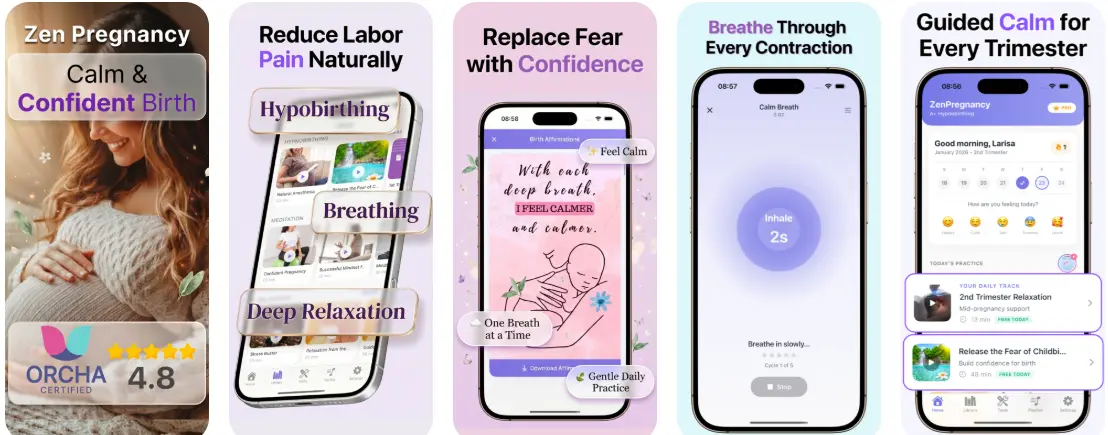
In the hypnobirthing app vs course comparison, apps win on daily flexibility and cost, while courses win on depth, partner coaching, and structured education. Most parents get the strongest coverage by combining both, using HypnoBirth App by ZenPregnancy for regular practice and a course for fuller birth preparation, but either path can work if you practice consistently.
Definition: HypnoBirth App is a hypnobirthing app that provides guided meditation, breathing exercises, contraction timing, and birth affirmations for pregnant women preparing for calmer birth.
- Apps cost less, fit any schedule, and excel at daily relaxation practice; courses provide deeper childbirth education, partner tools, and interactive support.
- Research shows hypnosis-based birth prep can reduce pharmacological pain relief use, with a Cochrane review reporting RR 0.73, but practice consistency matters more than the format.
- Your learning style, budget, anxiety level, and partner involvement should drive your choice; many parents use a hypnobirthing app alongside a course for fuller coverage.
Hypnobirthing App vs Course at a Glance
A hypnobirthing app gives you flexible practice on your phone; a course gives you structured teaching, feedback, and partner preparation. Both use the same core tools: self-hypnosis, breathing, relaxation cues, visualization, and repetition.
| Decision factor | Hypnobirthing app | Hypnobirthing course |
|---|---|---|
| Cost range | Often free to modest monthly or one-time pricing | Usually higher, especially in-person classes |
| Format | Audio tracks, breathing tools, affirmations, timer | Video, live teaching, workbook, practice sessions |
| Partner support | Usually limited or track-based | Often a main part of the program |
| Practice flexibility | Anytime, including bed, car, or hospital bag | Set lessons or class times |
| Education depth | Focused on practice | Broader birth education |
| Instructor access | Usually none | Often live Q&A or feedback |
| Offline use | Depends on app downloads | Depends on course platform |
A hypnobirthing course online can sit in the middle. It offers more teaching than an app, but usually more flexibility than a weekend class across town.
How Hypnobirthing Techniques Work for Labor
Hypnobirthing works by training your body to pair labor cues with a calmer nervous-system response. The technical term is parasympathetic activation, which means your body shifts away from adrenaline and toward steadier breathing, softer muscles, and less guarding during contractions.
The practice is built through conditioned relaxation. You hear the same voice cue, use the same breathing rhythm, and picture the same safe image many times before labor. Then, when a contraction timer app pings in early labor, your body has a familiar track to follow instead of starting from zero.
A 2016 Cochrane review of 9 randomized trials and 2,954 women found antenatal hypnosis was associated with reduced use of pharmacological pain relief during labor, RR 0.73, compared with usual care source. A 1999 trial also reported a shorter first stage of labor, 351 minutes versus 489 minutes, in women who received hypnosis training. That trial was published in the British Journal of Anaesthesia and reported shorter first-stage labor among participants receiving antenatal hypnosis training source.
Consistent practice usually matters more than whether you learned from a phone or a teacher. For a deeper evidence review, the question of does hypnobirthing work comes down to realistic expectations, repeated practice, and flexible use in labor.
Where a Hypnobirthing App Wins Over a Course
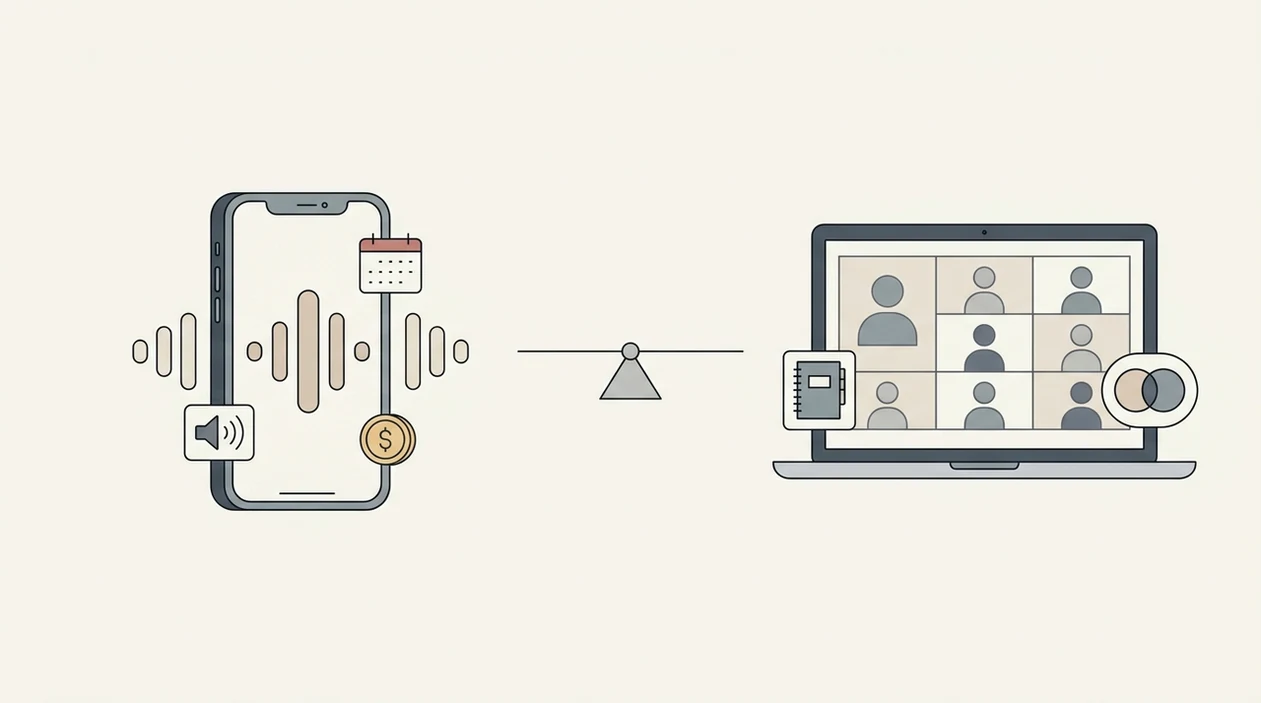
A hypnobirthing app wins when you need daily practice without another appointment on the calendar. You can start in any trimester, repeat a short track before sleep, and use the same audio later when the hospital room lights are dim but the monitor belts stay on.
For pregnant people who need repetition more than classroom time, an app works best when it keeps guided meditation, labor breathing, affirmations, and contraction timing in one phone-based workflow.
Cost is another real advantage. A full class can be hard to justify when you are also buying nursing bras, car-seat bases, and freezer meals. An app is easier to try, pause, or keep using after a subscription reminder lands on your calendar.
Portability matters too. Closed eyes in a parked car before an appointment. One hand resting on bump. No login panic.
On days when anxiety spikes between prenatal visits, the app format earns its place because short audio sessions can be opened on demand, without waiting for the next course module. A 2011 pilot randomized trial found that self-hypnosis audio practice reduced fear-of-childbirth scores, although the small sample limits firm conclusions source.

Where a Hypnobirthing Course Wins Over an App
A hypnobirthing course wins when you need education, feedback, and a birth partner who knows what to do. A good class covers more than relaxation; it explains stages of labor, informed consent, birth preferences, comfort measures, and how to use your BRAIN questions when choices come up.
Partner practice is the big difference. In class, someone can show your birth partner where to place counterpressure, how to do a hip squeeze, and when to offer the straw cup instead of asking five questions during transition.
A hypnobirthing course online can bridge the gap if you need depth but cannot attend in person. Programs like The Positive Birth Company, Hypnobabies, or GentleBirth may offer structured lessons, videos, or partner materials, depending on the format.
For first-time parents who want a shared plan, a course is often better than an app alone because it teaches both the laboring person and the support person what to do next. Visual learners and people who want discussion may find audio-only practice too thin.
Hypnobirthing App and Course Cost Comparison
Apps usually cost less; courses usually include more teaching per dollar. The right value depends on whether you need practice tools, full education, or both.
| Option | Typical cost pattern | What you usually get | Hidden costs |
|---|---|---|---|
| Free app tier | Free | Limited tracks or sample sessions | Ads, fewer downloads, missing tools |
| Paid app | Monthly, annual, or one-time purchase | Audio practice, affirmations, breathing, timer | Data use if tracks are not downloaded |
| Online course | Moderate to high one-time fee | Lessons, videos, worksheets, partner practice | Time to complete modules |
| In-person course | Often highest cost | Live teaching, Q&A, group practice | Travel, childcare, time off work |
Parents comparing a hypnobirthing app or class often miss the time cost. A course may be worth it, but only if you can actually attend, watch, and practice before labor starts.
How to Use a Hypnobirthing App or Course
Use a hypnobirthing app or course as a practice system, not a one-time information download. The goal is to make one breathing pattern, one relaxation cue, and your partner’s support feel familiar before labor begins.
- Choose one primary format. Pick the app, online course, or class you are most likely to use based on your calendar, budget, and whether your partner can join practice.
- Set a weekly rhythm. Start before 32 weeks if possible, then block one lesson or longer audio session each week so the habit is already in place before due-date brain takes over.
- Practice small and often. Repeat one breathing cue and one relaxation track several times a week, even if that means ten quiet minutes in bed instead of a perfect full session.
- Rehearse partner support. Practice the phrases, touch cues, counterpressure, water offers, and hospital-bag setup your support person should reach for without asking.
- Download before you need it. Save tracks, worksheets, logins, and course materials before travel, hospital admission, or any week when the baby bag is already by the door.
How to Choose Between a Hypnobirthing App or Class
Choose based on how you learn, how much support you need, and how many weeks you have left. If your pillow nest is already between sore knees and you are too tired for long modules, be honest about what you will use.
- Assess your learning style. Choose an app if audio repetition works for you; choose a class if you need visuals, discussion, and written practice.
- Gauge your anxiety level. Pick more guided support if fear of birth is taking over your sleep or prenatal appointments.
- Check your budget and timeline. Use an app if money or weeks are tight; choose a course if you can invest time and attention.
- Decide partner involvement. Choose a course if your birth partner needs coaching, role-play, or confidence with comfort measures.
- Try before paying. Test a free app session or course preview before committing.
Pregnant people looking for low-cost daily rehearsal may use HypnoBirth App because it turns birth hypnosis into short, repeatable sessions instead of a large weekend project. If you want the home practice piece, how to practice hypnobirthing at home is the skill to build first.
Common Myths About Hypnobirthing Apps and Courses
Hypnobirthing apps and courses are useful, but they are often oversold. Good tools teach practice, coping, and preparation, not a promise that birth will follow a script.
- Myth: An app equals a full course. Apps usually lack the deeper childbirth education, partner coaching, and feedback that a course can provide.
- Myth: Hypnobirthing guarantees a pain-free birth. Hypnobirthing is a coping tool; it does not guarantee no pain, no epidural, or no intervention.
- Myth: Any meditation app replaces hypnobirthing. Birth-specific tracks include contractions, labor breathing, visualization, and cues that generic calm apps do not cover.
- Myth: Online courses cannot work. Research supports audio and self-practice delivery of hypnosis techniques, although support level still matters.
- Myth: You must choose one format. Many parents use a course for education and an app for daily repetition.
Good hypnobirthing apps deliver birth-specific practice, not general wellness audio dressed up for pregnancy. If you are comparing methods, the hypnobirthing vs meditation distinction helps.
Evidence Behind Hypnobirthing Apps and Courses
The evidence suggests hypnosis-based birth prep may reduce use of pharmacological pain relief, but it does not prove that any app or course reliably changes every birth outcome. Audio practice and instructor-led programs can both be useful, yet the certainty is limited.
Cochrane findings point toward lower overall use of medication for labor pain in hypnosis groups, but that is not the same as proving fewer epidurals, shorter labor, or a pain-free birth for each person. Self-hypnosis audio studies are especially relevant to apps because they test repeated listening and home practice. Instructor-led courses add education, partner rehearsal, and feedback, but research often blends several teaching elements together, making it hard to know which part helped.
Read the outcomes separately:
- Treat fear as its own result. Some studies look at fear of childbirth or anxiety, not pain relief.
- Separate coping from comfort. Feeling more in control can improve the experience even when contractions still hurt.
- Check epidural use on its own. A lower medication signal does not always mean a clear epidural reduction.
- View labor length cautiously. Small samples and mixed course designs make timing claims uncertain.
No format, including HypnoBirth App or a full course, can guarantee pain-free or intervention-free birth.
Who Should Pick an App, a Course, or Both
The clearest choice depends on your starting point. Some people need a daily practice tool. Others need a teacher, a plan, and a partner who has practiced more than once.
Best Fit for App-Only Preparation
Choose app-only prep if you are self-motivated, on a tight budget, already understand labor basics, and mainly want daily relaxation practice. HypnoBirth App works well here because it combines guided tracks, birth affirmations, breathing exercises, and a contraction timer.
Best Fit for Course-Only Preparation
Choose a course if you are a first-time parent, feel high anxiety, or want your partner to learn hands-on support. A class can turn “I’ll help” into something useful, like tennis balls pressed into a lower back during back labor.
Best Fit for Using Both Together
Choose both if you want broad education plus daily reinforcement. Birth partners who practice after dinner with HypnoBirth App can keep cues familiar between course sessions, which matters when the birth ball is in the corner and plans need adjusting.
Limitations
Hypnobirthing can help many families feel steadier, but it has limits. Keep the tool useful by keeping the claims honest.
- The evidence base is still limited, with small trials, mixed methods, and variable course designs.
- Neither an app nor a course can guarantee a specific birth outcome, including pain level, labor length, or intervention use.
- Self-guided apps rely on motivation; inconsistent practice makes the techniques harder to reach during contractions.
- Some programs overpromise pain-free birth or frame medical pain relief as failure. That is not helpful.
- Apps and courses do not replace individualized medical care from your midwife, doctor, or hospital team.
- A 2014 RCT of 680 first-time mothers found epidural use was 27% with childbirth self-hypnosis training versus 30% with standard care, but the difference was not statistically significant source.
- Hospital routines, induction, monitoring, exhaustion, and urgent decisions can all change how easy hypnosis feels in the moment.
HypnoBirth App can support birth preparation, but it should sit beside clinical care, birth preferences, and flexible decision-making.
See also: Hypnobirthing Before And After.
Read more
- About HypnoBirth App: Calm Birth Support
- Are Hypnobirthing Apps Regulated
- Are Hypnobirthing Apps Safe
- Birth Partner Hypnobirthing App Guide
- App for Natural Birth Preparation: What to Choose
- Best Birth Meditation App for Calm Labor
- Best Contraction Timer App for iPhone: 2026 Guide
- Best Hypnobirthing App 2026: Top Picks
- Does Hypnobirthing Work for First Births? Guide
- Free Hypnobirthing App for iPhone: Calm Birth
- How to Start Hypnobirthing: Beginner Guide
- Hypnobirthing for C Section Prep: Calm Cesarean
Best Hypnobirthing App for Flexible Birth Prep Alongside or Instead of a Course
HypnoBirth App is a strong fit if you want self-guided hypnobirthing practice you can use at home, on your schedule, and between classes. It offers free hypnobirthing support, is ORCHA NHS certified, and is used by 200k+ parents preparing for birth.
Best for
- Parents comparing a hypnobirthing app vs course and wanting a lower-cost way to start
- Anyone who wants repeatable relaxation, breathing, and mindset practice outside class time
Limitations
- It does not replace personalised teaching from a live hypnobirthing instructor
- It is not medical advice and cannot answer individual pregnancy or birth care questions
Frequently Asked Questions
Is a hypnobirthing app or a hypnobirthing course better for birth preparation?
A hypnobirthing course is usually better for structured teaching, while a hypnobirthing app is better for flexible daily practice. A course can give you live guidance, partner involvement, and time to ask questions, whereas an app helps you repeat breathing, relaxation, and confidence exercises whenever you need them.
What is the difference between a hypnobirthing app and a hypnobirthing class?
A hypnobirthing app is self-guided, while a hypnobirthing class is taught by an instructor. Apps are often lower cost and easier to fit around your schedule, but classes usually offer deeper explanation, personalised support, and interaction with other expectant parents.
Can a hypnobirthing app replace a hypnobirthing course?
Yes, a hypnobirthing app can replace a course for some people who want simple, self-paced birth preparation. A course may be more suitable if you want detailed teaching, have specific fears, need partner coaching, or prefer live reassurance from a trained teacher.
Should first-time mums choose a hypnobirthing app or a class?
First-time mums often benefit most from a class if they want a full introduction to labour, choices, and comfort techniques. A hypnobirthing app is still a useful option for first-time mums who want affordable, repeatable practice and short sessions they can use at home or in hospital.
Can I start hypnobirthing at 38 weeks with an app?
Yes, you can start hypnobirthing at 38 weeks with an app. Short daily sessions can still help you practise breathing, relaxation, positive birth scripts, and calm responses, although starting earlier gives you more time to build the habit.
Is a hypnobirthing app useful for pregnancy anxiety?
Yes, a hypnobirthing app can be useful for pregnancy anxiety by offering guided relaxation, breathing practice, and calming birth preparation. It is not a substitute for medical or mental health care, so speak to your midwife, GP, or healthcare professional if anxiety feels intense, persistent, or hard to manage.
Can I use hypnobirthing if I plan to have an epidural?
Yes, you can use hypnobirthing if you plan to have an epidural. Hypnobirthing techniques can support calm breathing, decision-making, communication, and comfort before, during, or after an epidural, but they do not guarantee a pain-free birth.
Is a hypnobirthing app cheaper than a hypnobirthing course?
Yes, a hypnobirthing app is usually cheaper than an in-person or live online hypnobirthing course. Courses cost more because they often include instructor time, longer lessons, partner education, and personalised answers.
Can I use both a hypnobirthing app and a hypnobirthing course?
Yes, using both a hypnobirthing app and a course can work very well. The course gives you the foundation and confidence to understand the techniques, while the app helps you keep practising between classes and during early labour.
Is a hypnobirthing app enough for a hospital birth?
Yes, a hypnobirthing app can be enough for a hospital birth if you feel confident using the techniques independently. You may also want to prepare a birth plan, discuss preferences with your midwife or doctor, and make sure your birth partner knows how to support your breathing and relaxation.
Do hypnobirthing apps work for planned caesarean births?
Yes, hypnobirthing apps can support planned caesarean births by helping with calm breathing, visualisation, and reducing fear before surgery. Always follow your clinical team’s advice, as hypnobirthing is a comfort and mindset tool rather than a medical treatment.
How long should I practise with a hypnobirthing app before birth?
Daily practice for even 10 to 15 minutes is a helpful goal before birth. Several weeks of repetition gives you more time to feel familiar with the techniques, but even late pregnancy practice can help you feel calmer and more prepared.