 Hypno
HypnoHow To Practice Hypnobirthing At Home: A Daily Routine That Actually Works
200,000+ moms • ORCHA NHS Certified • Free on iOS & Android
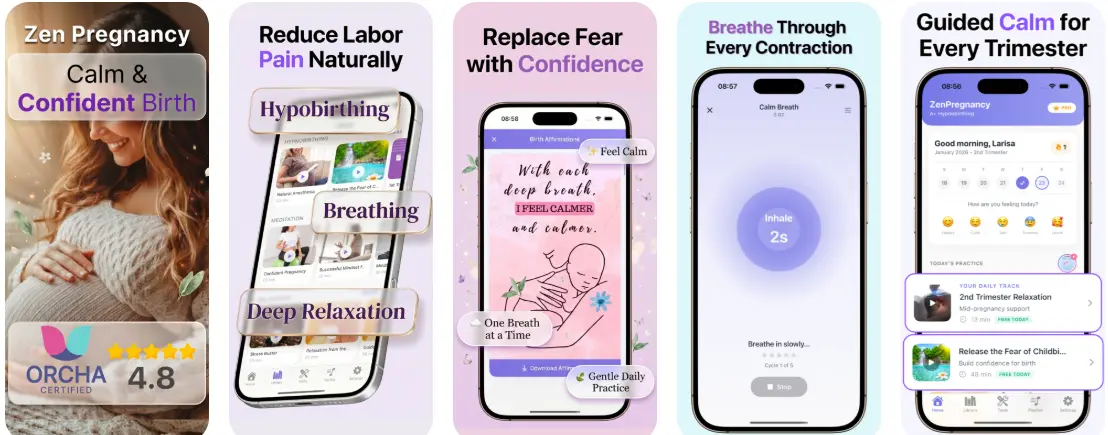
If you're learning how to practice hypnobirthing at home, set aside 15–20 minutes daily for a three-pillar routine: surge breathing exercises, guided relaxation audio, and birth affirmations or visualizations. Start in your late second trimester, create a calm practice space, and involve your birth partner so the techniques become automatic by labor day.
This guide is educational and does not replace advice from your midwife, OB-GYN, doula, or maternity care team. If you have a high-risk pregnancy, reduced fetal movement, bleeding, severe pain, preeclampsia symptoms, or trauma-related concerns, ask your clinician before starting or adapting any practice.
Definition: Hypnobirthing is a structured childbirth preparation method that uses self-hypnosis, controlled breathing, guided relaxation, and positive affirmations to reduce fear, manage pain, and promote a calmer birth experience.
TL;DR
- Commit to 15–20 minutes of daily practice split across morning and evening micro-sessions starting around 28 weeks.
- Combine three pillars every session: surge breathing, guided relaxation audio, and affirmations or visualization.
- Involve your birth partner in at least two practice sessions per week using scripts, light-touch massage, and breathing cues.
- Use HypnoBirth App to automate session timing, track consistency, and access customizable audio tracks.
- Hypnobirthing is evidence-backed for reducing fear and pharmacological pain relief use, but it is not a guarantee of a pain-free or intervention-free birth.
What Hypnobirthing at Home Actually Means
Hypnobirthing at home means practicing breathing, relaxation, affirmations, and visualization in short daily sessions before labor begins. You are not unconscious, asleep, or “out of it.” You stay awake, aware, and able to make decisions.
At-home practice is different from attending a full hypnobirthing course. A course teaches the theory, birth physiology, and partner skills in more depth. Daily self-practice is the repetition that helps your body remember what to do when contractions start. Both can work together, but they are not the same thing.
You can use hypnobirthing with an unmedicated birth, an epidural, an induction, or a planned cesarean. The skill is not tied to one birth plan. I’ve seen people use the same release breath in a quiet bedroom, a triage bay, and a bright operating room.
The room may not stay calm. Your cue can.
How Daily Hypnobirthing Practice Works on Your Nervous System
Daily hypnobirthing practice works by teaching your nervous system to move from threat mode into a calmer, steadier state. The goal is not to remove all sensation; it is to reduce fear-driven tension so coping skills arrive faster.
- Fear can amplify pain. The fear-tension-pain cycle describes how anxious thoughts tighten muscles, shorten the breath, and make sensations feel harder to manage.
- Repetition builds a conditioned response. If you pair a release breath with the same guided track each night, your body starts to recognize the cue.
- Neuroplasticity supports the habit. Daily repetition strengthens calming pathways, much like practicing a song makes the next note easier to find.
- Relaxation supports birth hormones. A calmer body is more favorable for oxytocin and endorphins than a body braced in panic.
- Research is promising, not absolute. In a 2013 randomized trial of 680 first-time mothers, self-hypnosis training was linked with lower fear of childbirth and lower epidural use, 36.5% versus 46.6% in controls source.
For most people, daily hypnobirthing practice works best when breathing, audio, and birth affirmations are repeated together, because labor rarely gives you time to think through a long technique.
Requirements Before You Start Hypnobirthing at Home

Start hypnobirthing at home around 28 weeks if you can, though earlier practice is welcome. If you are already later in pregnancy, begin anyway. A week of short sessions can still teach your breath something useful.
Set up one calm practice space. Dim the light, silence extra notifications, and choose a position you can repeat. Many pregnant people like left-side lying with one earbud in, especially at night when the house finally goes quiet.
Choose your tools before your first session. You might use printed scripts, downloaded audio tracks, or an app such as HypnoBirth App for timed sessions and reminders. If you are still comparing formats, the hypnobirthing app vs course question is worth sorting out early.
Clinicians typically recommend discussing birth preparation methods with your maternity care provider, especially if you have a high-risk pregnancy, planned induction, trauma history, or specific medical concerns. Ask where hypnobirthing fits inside your birth plan, not instead of it.

How To Use a Hypnobirthing App for Daily Practice
Use an app for structure, not pressure. A good hypnobirthing app gives you timed breathing, guided tracks, and reminders, not a promise that birth will follow a script.
- Choose one structured practice tool and enter your due date if it offers stage-based reminders.
- Set daily reminders for one morning micro-session and one evening wind-down session, ideally after habits you already do.
- Begin with 4 minutes of surge breathing, using a slow inhale through the nose and a longer release through the mouth.
- Play a 10-minute guided relaxation track or self-hypnosis audio while sitting, side-lying, or resting with headphones.
- Close with 3–5 minutes of affirmations or visualization, linking one anchor phrase to your slowest breath.
- Log the session so consistency becomes visible and the habit feels easier to continue.
App reminders work well when they sit after brushing teeth. Vague intentions disappear quickly when pregnancy sleep is broken.
Step 1 — Learn Surge Breathing Techniques for Hypnobirthing at Home
Surge breathing is the core breathing skill for hypnobirthing at home. Practice it for 3–5 minutes in the morning and again in the evening, before adding audio or affirmations.
Up-Breathing for Surges
Use up-breathing during contractions, often called surges in hypnobirthing. Breathe in slowly through your nose, then let the exhale leave through your mouth for longer than the inhale. Soften your shoulders. Unclench your tongue from the roof of your mouth. Those tiny details matter when intensity rises.
Down-Breathing for Birth
Down-breathing, sometimes called J-breathing, is used during the birthing or pushing stage when your care team says it is appropriate. The breath feels low and directed, as if you are breathing down and out rather than holding tension in your face.
Between surges, use calm breathing. Let the inhale be easy and the exhale be a reset. Common mistakes include holding your breath, breathing too fast, lifting the shoulders, or trying to perform the technique perfectly. Practice messy first. Labor is not a studio recording.
Step 2 — Guided Relaxation and Self-Hypnosis Audio Sessions
Guided relaxation audio helps you rehearse calm without having to remember every step yourself. Most tracks include a body scan, a deepening sequence, and positive suggestions tied to birth.
- A daily track can be short. Ten to fifteen minutes is enough for most practice sessions.
- Headphones can help. A soft countdown voice through headphones often blocks just enough household noise.
- The body learns the sequence. After repeated sessions, the first few breaths may start relaxation before the track fully begins.
- Variety prevents boredom. HypnoBirth App includes customizable tracks so the routine can stay familiar without becoming stale.
- Pain research is mixed but encouraging. A 2012 randomized trial of 122 women found that structured hypnobirthing was linked with lower labor pain scores and higher birth satisfaction than standard care source.
A guided track is often easier than silent meditation in late pregnancy because you do not have to lead yourself while baby kicks under the duvet.
Step 3 — Affirmations and Visualization for a Calm Birth
Birth affirmations are short statements that direct your attention toward capability, safety, and choice. Use phrases you can believe on a hard day, such as “My body knows how to birth my baby,” “Each breath gives me a job,” or “I can meet this surge one breath at a time.”
- Read them aloud. Speaking an affirmation makes it more active than scrolling past it.
- Place them where you will see them. A bathroom mirror works well during the 2 a.m. toilet trip.
- Record or play them. Hearing the same anchor phrase builds familiarity.
- Pair them with breath. Say the phrase on the exhale, not as a separate task.
- Rehearse the birth scene. Visualization can move from early labor to meeting your baby, while keeping room for medical changes.
A 2016 systematic review of nine randomized trials found that antenatal hypnosis was associated with reduced pharmacological pain relief in some studies and higher childbirth satisfaction in others, though evidence quality was low to moderate source.
Step 4 — Partner Practice Sessions for Hypnobirthing at Home
Partner practice matters because your birth partner may become your external memory during active labor. When you are deep in sensation, you may not want instructions. You may only need one familiar cue.
Schedule at least two partner sessions per week. Your partner can read a short script in a low, steady voice, leaving space between sentences. “Drop your shoulders.” Pause. “Long breath out.” Pause again. The pacing is as important as the words.
Add light-touch massage if it feels good. Some people like strokes down the arm or back; others dislike touch during surges. Decide this at home, not for the first time in the fluorescent hallway outside labor rooms.
During rehearsal, have your partner time practice surges and cue breathing. Shared tracks or partner mode in apps like HypnoBirth App and ZenPregnancy can make this feel less awkward because the script is already there. The partner whispering a relaxation cue should sound familiar by labor day.
Sample Weekly Hypnobirthing at Home Schedule
A weekly hypnobirthing schedule should be simple enough to survive real life. If the plan depends on a silent house and a perfect mood, it will probably fall apart.
Weekday Morning and Evening Micro-Practices
Monday through Friday, do 5 minutes in the morning: surge breathing followed by one birth affirmation. In the evening, use a 10–15 minute guided relaxation track. On two weeknights, replace the solo audio session with partner practice, including script reading, timing, and one touch cue.
Weekend Deep Visualization Sessions
On Saturday or Sunday, add one 20-minute visualization session. Rehearse early labor at home, travel to your birth place, support from your team, and the first moments after birth. If you are planning a hospital birth, practicing flexible imagery pairs well with hypnobirthing for hospital birth.
When life gets busy, keep the smallest version. Five minutes counts. A tracked streak can be motivating, but missing a day is not failure. Reset the plan.
Common Mistakes When Practicing Hypnobirthing at Home
The most common hypnobirthing mistakes are starting late, practicing irregularly, and treating the method like a guarantee. Hypnobirthing is a coping system, not a contract with birth.
- Waiting too long reduces repetition. Starting near your due date gives your nervous system less time to learn the cues.
- Sporadic practice is harder to access. One long Sunday session is less useful than short daily repetition.
- Expecting silence creates frustration. Real homes have doorbells, older children, and phones buzzing.
- Skipping partner practice leaves a gap. Your partner needs to rehearse the words before labor, not improvise them.
- Overpromising leads to disappointment. A 2022 Cochrane-style review found hypnosis may reduce pharmacological pain relief and shorten labor, but more high-quality research is still needed.
If you want a deeper evidence discussion, the question does hypnobirthing work deserves a separate look because outcomes vary by study, protocol, and person.
When To Call Your Maternity Care Provider
Call your maternity care provider whenever symptoms feel urgent, unusual, or outside the plan you have been given. Hypnobirthing should never delay medical assessment; calming your breath is useful while you seek help, not instead of seeking it.
Red flags include vaginal bleeding, reduced or changed baby movements, severe headache, vision changes, severe abdominal pain, chest pain, fever, waters breaking before you expect them to, or contractions your team has told you to report. If something feels wrong, treat that feeling as enough reason to call.
Use a simple plan before labor starts:
- Ask your midwife or OB-GYN which symptoms mean phone advice, triage, or emergency care.
- Tell them if you have a high-risk pregnancy, induction plan, planned cesarean, previous traumatic birth, or anxiety around examinations.
- Discuss how breathing, scripts, music, affirmations, and partner cues can fit safely into your birth plan.
- Confirm when down-breathing or pushing-style techniques are appropriate, especially with an epidural or assisted birth.
- Use relaxation tools as support while following clinical guidance.
The safest hypnobirthing practice leaves room for both: steady inner cues and timely professional care.
How To Know Your Hypnobirthing Practice Is Working
You know hypnobirthing practice is working when calm arrives faster and the techniques feel less like instructions. The shift is usually quiet, not dramatic.
You may notice that your shoulders drop within the first minute of a guided track. Breathing patterns start to happen without counting. Your general anxiety about birth may soften, even if you still have practical questions scribbled before an appointment.
Another good sign is partner responsiveness. If one word, one touch, or one anchor phrase helps you settle, the cue is becoming conditioned. Some people say, “I know what to do with my breath now,” after a week of short sessions. That sentence always matters to me.
Practice is also working when it survives imperfect settings. Non-slip socks on cool tile, bright lights, hallway noise, or Braxton Hicks at bedtime become chances to rehearse calm, not proof that you failed.
Limitations
Hypnobirthing at home is useful, but it has limits. Keep those limits clear so the practice supports your birth rather than narrowing your choices.
- Evidence is promising but not definitive; studies are often small, use different protocols, and show mixed results.
- Hypnobirthing cannot replace medical care in high-risk pregnancies, urgent symptoms, fetal concerns, or emergencies.
- People with trauma histories, severe anxiety, or certain mental health conditions may find guided imagery triggering and should seek tailored support.
- Results vary widely; some people report major pain relief, while others mainly notice less fear and more focus.
- App-based practice may leave gaps if you skip basic childbirth education, comfort measures, and provider conversations.
- Birth can change quickly, so your plan should include medical options, communication preferences, and consent questions.
- At-home practice depends on consistency; downloading audio without using it will not build the conditioned response.
The safest frame is flexible confidence. You are learning skills for whatever birth asks of you.
See also: Hypnobirthing App For Android.
Read more
- About HypnoBirth App: Calm Birth Support
- Are Hypnobirthing Apps Regulated
- Are Hypnobirthing Apps Safe
- Birth Partner Hypnobirthing App Guide
- App for Natural Birth Preparation: What to Choose
- Best Birth Meditation App for Calm Labor
- Best Contraction Timer App for iPhone: 2026 Guide
- Best Hypnobirthing App 2026: Top Picks
- Does Hypnobirthing Work for First Births? Guide
- Free Hypnobirthing App for iPhone: Calm Birth
- How to Start Hypnobirthing: Beginner Guide
- Hypnobirthing for C Section Prep: Calm Cesarean
Best Hypnobirthing App for Practicing at Home
HypnoBirth App makes it easy to build a simple at-home hypnobirthing routine with guided audio, breathing practice, affirmations, and relaxation sessions you can repeat daily. It is free to start, ORCHA NHS certified, and trusted by 200k+ users preparing for birth in a calmer, more consistent way.
Best for
- Daily hypnobirthing practice at home
- Guided audio, breathing, affirmations, and visualization in one place
Limitations
- It does not replace advice from your midwife, doctor, or birth team
- Best results come from regular practice rather than one-off listening
Frequently Asked Questions
How do I practise hypnobirthing at home every day?
Practise hypnobirthing at home by doing a short daily routine of breathing, relaxation audio, affirmations, and visualisation. Aim for 10–20 minutes a day in a quiet place, then add quick breathing practice during normal activities so the techniques feel familiar before labour.
When should I start practising hypnobirthing at home?
The best time to start hypnobirthing is usually from the second or early third trimester. Starting around 20–30 weeks gives you more time to build the habit, but even a few weeks of regular practice can help you feel calmer and more prepared.
Can I start hypnobirthing at 38 weeks pregnant?
Yes, you can start hypnobirthing at 38 weeks pregnant. Focus on simple techniques you can learn quickly, such as slow breathing, a short relaxation track, positive affirmations, and a few birth preferences to discuss with your midwife or doctor.
How long should I practise hypnobirthing each day?
A useful daily hypnobirthing practice is 10–20 minutes a day. Short, consistent sessions are usually more effective than occasional long ones, especially if you also practise calming breaths for a minute or two throughout the day.
What hypnobirthing breathing technique can I practise at home?
A common hypnobirthing breathing technique is slow breathing in through the nose and a longer, softer breath out through the mouth. You can practise by inhaling for about four counts and exhaling for six to eight counts, adjusting the pace so it feels comfortable and not forced.
Does hypnobirthing help with pregnancy anxiety?
Yes, hypnobirthing can help some people manage pregnancy anxiety by teaching relaxation, breathing, and confidence-building techniques. It is not a replacement for mental health or medical care, so speak to your midwife, GP, or doctor if anxiety feels overwhelming, persistent, or affects daily life.
Can first-time mums use hypnobirthing at home?
Yes, first-time mums can use hypnobirthing at home. The techniques are designed to help you understand labour, reduce fear, practise coping tools, and involve your birth partner, even if you have no previous birth experience.
Can I use hypnobirthing if I want an epidural?
Yes, you can use hypnobirthing if you want an epidural. Hypnobirthing is compatible with many birth choices because breathing, relaxation, and decision-making tools can still support you before, during, and after pain relief.
Is a hypnobirthing app as good as a hypnobirthing class?
A hypnobirthing app can be a good option if you want flexible, affordable practice at home. A class may offer more personal guidance and live questions, while an app is useful for daily audio, reminders, breathing practice, and refreshing techniques whenever you need them.
What should my birth partner do during hypnobirthing practice at home?
Your birth partner should practise calm support, prompts, and practical help during hypnobirthing sessions. They can read affirmations, play relaxation audio, remind you to breathe slowly, practise light touch or massage if you like it, and learn your birth preferences.
Do hypnobirthing affirmations really work?
Hypnobirthing affirmations can work as a confidence and relaxation tool when they are repeated regularly. They do not guarantee a specific birth outcome, but they can help replace fearful thoughts with calmer, more supportive messages during pregnancy and labour.
What do I need to practise hypnobirthing at home?
You need only a quiet space, a comfortable position, and a simple routine to practise hypnobirthing at home. Helpful extras include guided audio, headphones, written affirmations, a birth preferences template, and support from your partner or chosen birth companion.