 Hypno
HypnoHow To Breathe Through Contractions With Phone Cues
200,000+ moms • ORCHA NHS Certified • Free on iOS & Android
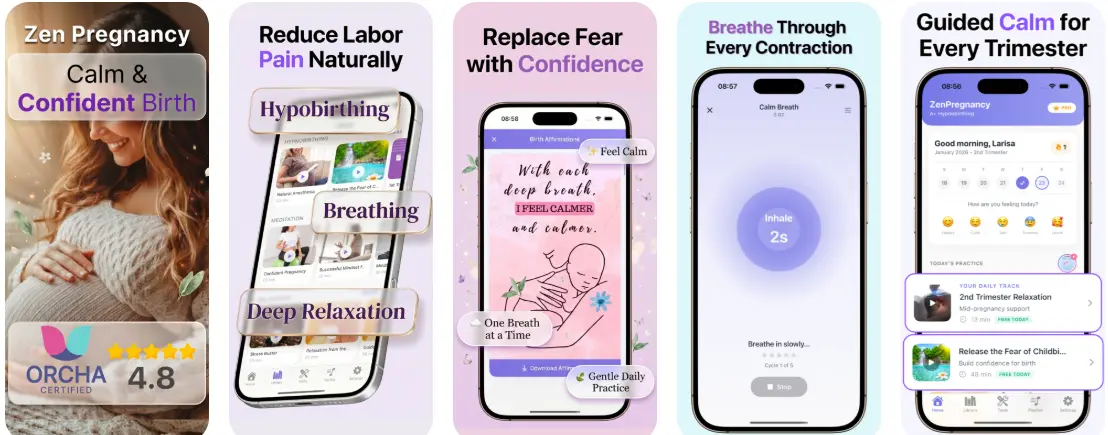
To learn how to breathe through contractions with phone cues, download a hypnobirthing breathing app before labor, practice the guided inhale-exhale prompts daily, then have your birth partner manage the phone during contractions so you can close your eyes and follow audio or haptic cues hands-free. Your phone automates the timing so you focus on slow exhales instead of counting.
Definition: Phone labor breathing cues are audio prompts, visual pulsing graphics, or haptic vibrations delivered by a smartphone app that guide a laboring person through timed inhales and longer exhales during each contraction.
TL;DR
- Practice phone-guided breathing daily in the third trimester so cues feel automatic during labor.
- Set your phone to airplane mode with downloaded tracks, a full battery, and a power bank as backup.
- Assign your birth partner the role of managing the phone so you can keep your eyes closed and follow audio or vibration cues.
What Phone Labor Breathing Cues Are and Why They Work
Phone labor breathing cues are timed prompts from a smartphone that help you breathe through contractions without counting in your head. They may be a calm voice, a pulsing circle on the screen, a soft tone, or vibration taps in your hand.
The basic pattern is simple: breathe in gently, then let the exhale last longer than the inhale. That longer out-breath gives your body something steady to follow as the contraction builds, peaks, and fades. Clinicians typically recommend slow breathing and relaxation as comfort measures, alongside normal maternity assessment and pain relief choices.
The real help is cognitive load. When the contraction timer app pings in early labor, you don't want five decisions. You want one cue.
A 2016 Cochrane review found that relaxation techniques, including breathing and visualization, were linked with less pain medication use and higher satisfaction with childbirth source. A 2017 randomized trial also found lower labor pain scores with controlled breathing and relaxation practice in late pregnancy.
How Phone-Guided Breathing During Contractions Works
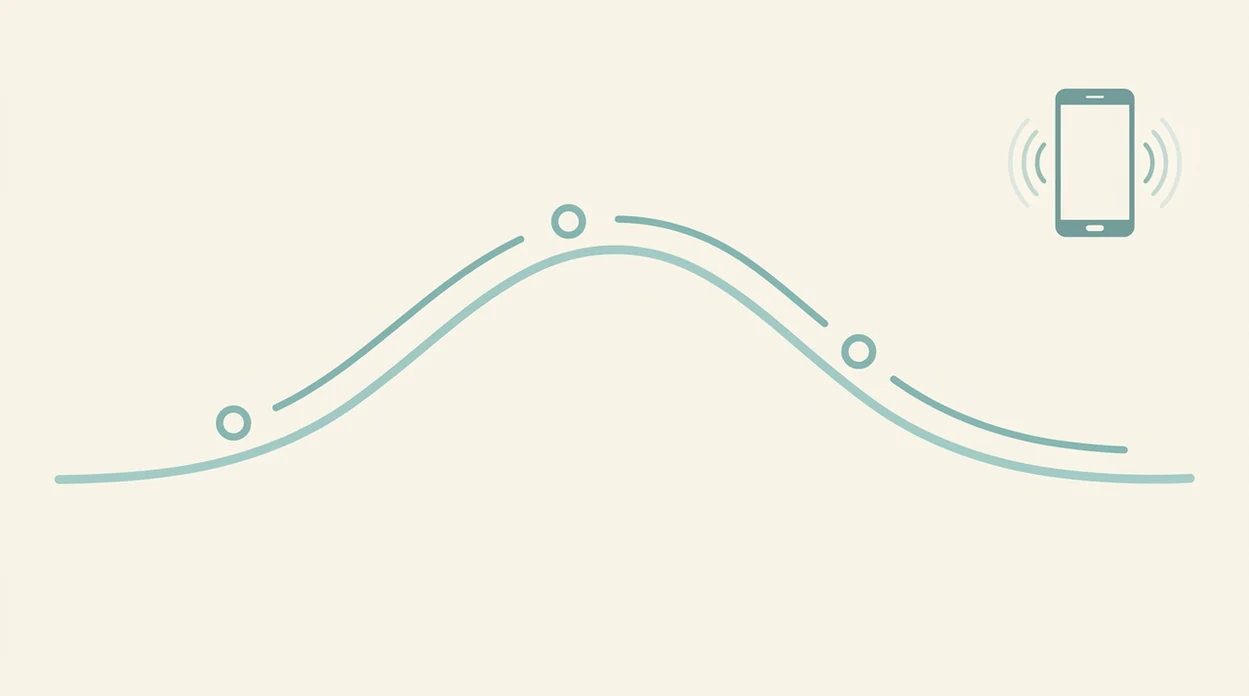
Phone-guided breathing works by matching your breath to the contraction wave: build, peak, release. The app gives a repeatable rhythm so your body recognizes what to do before your thinking brain gets busy.
Most cue modes do the same job in different ways. Audio pacing tells you when to inhale and exhale. A visual pulse expands and shrinks on the screen. Haptic vibration gives a tactile cue when sound feels too much. Pair that with a contraction timer, and you get a feedback loop: start the timer, follow the breathing, stop it, rest, repeat.
That loop matters because repeated practice can create a conditioned relaxation response. In plain words, your body starts linking that sound or vibration with softening your jaw, dropping your shoulders, and lengthening the exhale.
At home, practice while leaning over the sofa or standing beside the bed. Not fancy. Useful.
Requirements Before You Start Your Contraction Breathing Guide
Set up your contraction breathing guide before labor begins. Early labor is not the time to compare app settings with one hand on the bathroom sink.
- App ready: Download your chosen hypnobirthing breathing app and listen to the main tracks before labor day.
- Battery ready: Charge your phone fully and pack a power bank in the same pocket as your charger.
- Sound ready: Test earbuds, a small Bluetooth speaker, or quiet phone audio so prompts are clear.
- Focus ready: Use airplane mode and silence notifications so texts do not cut across a contraction.
- Offline ready: Download all tracks in advance so your phone labor breathing cues work without Wi-Fi.
- Partner ready: Show your birth partner how to start the timer, switch tracks, and lower the volume.
If you want a simpler setup for daily practice, a tool to practice labor breathing can help you build the rhythm before the hospital bag is zipped.

How To Use Phone Cues for Breathing Through Contractions
Use phone cues as a hands-free rhythm, not as another task to manage. The most common medically supported way to use breathing in labor is repeated slow breathing combined with relaxation and support from your birth team.
- Set your phone to airplane mode and open your breathing app before contractions need full attention.
- Select the breathing track, haptic cue, or visual pulse you practiced during pregnancy.
- Tap the contraction timer when you feel the first tightening or low wave begin.
- Follow the audio or haptic inhale-exhale prompts with your eyes closed, soft jaw, and loose shoulders.
- Let your birth partner stop the timer, offer a straw cup, and cue the rest period.
- Reset your body between contractions, then repeat the same pattern for the next one.
Adjust the count if it feels forced. A 4-in, 8-out rhythm may help some people, but another person may need 3-in, 5-out when contractions get closer. Good hypnobirthing apps deliver a repeatable breathing rhythm and timer support, not a promise that labor will stay quiet or pain-free.
Syncing Phone Breathing Cues With Your Birth Partner's Role
Your birth partner should manage the phone so you can stay inside the rhythm. During a contraction, they hold the phone, tap start and stop, adjust volume, and switch tracks only if you ask.
Add touch to the cue. Your partner can press tennis balls into your lower back during back labor, match a hip squeeze to each long exhale, or rest one hand on your shoulder as the audio slows. Rehearse this during pregnancy practice sessions, even for five minutes before breakfast, so nobody is learning the buttons during active labor.
If the phone fails, your partner can voice-coach the same rhythm: “In softly. Out longer. Drop your jaw.” Simple beats clever here.
A 2019 systematic review found that focused breathing and relaxation can reduce perceived pain intensity and anxiety, though results vary across studies. If you want the breathing pattern without phone setup first, start with hypnobirthing breathing techniques.
Common Mistakes With Phone-Guided Contraction Breathing
The biggest mistake is downloading a breathing app in early labor and hoping it feels natural. It usually won't. The cues need to feel familiar before the room has sticky hospital socks, monitor straps, and gown snaps at the shoulder.
Another common mistake is leaving notifications on. A bank alert or group chat ping can pull you out of the contraction faster than you expect. Airplane mode is not a tiny detail.
Don't stare at the screen through every contraction. Use audio or haptic cues, close your eyes, and let the phone sit in your partner's hand. Visuals are useful, but bright screen light can become annoying in a dim room.
Also avoid treating one count as law. If 4-in, 8-out makes you gasp, shorten it. Breathing should feel sustainable, not like passing a test.
Pack the backup plan too: partner coaching, midwife guidance, medical pain relief options, charger, and power bank. For app comparisons, a best app for labor breathing guide can help, but practice matters more than the logo.
What To Do When Phone Cues Feel Overwhelming During Transition
If phone cues feel overwhelming during transition, simplify fast. Transition can make normal sounds feel sharp, and the track that felt soothing at 34 weeks may suddenly feel like too much.
Switch to one familiar track on repeat, with no browsing. If sound irritates you, mute the audio and use only a pulsing visual or haptic vibration. If even that feels wrong, hand the whole job to your birth partner. They can voice-coach the same rhythm beside the bed while you keep your eyes closed.
Reset the plan.
You also have full permission to abandon the phone. Use your own rhythm, follow your midwife's coaching, change positions, or ask about medical pain relief. Phone breathing usually works best when it supports the body you have in that moment, while partner-led breathing fits people who need fewer external cues.
When To Contact Your Care Team During Contractions
Contact your care team whenever contractions come with worrying symptoms, broken waters, or a feeling that something is not right. Phone breathing is a comfort tool; it cannot assess you, your cervix, or your baby.
Follow the instructions from your midwife, OB, hospital, birth center, or triage line before any app prompt. If their advice changes, it is completely appropriate to stop the track, hand over the phone, and move into the clinical plan.
- Call urgently if you have heavy bleeding, a severe headache, fever, or reduced fetal movement.
- Report waters breaking, especially if the fluid is green, brown, foul-smelling, or you are unsure what you are seeing.
- Tell triage about constant pain that does not ease between contractions, sharp pain, or pain that feels different from normal contraction waves.
- Share any concern about the baby, your blood pressure symptoms, your temperature, or your ability to cope at home.
- Follow the next instruction you are given, even if that means leaving the app, going in for assessment, or changing your birth plan.
The safest cue is the one that gets quieter when your care team needs your attention.
Verification: Signs Your Phone Breathing Cues Are Working
Your phone breathing cues are working if your exhale naturally becomes longer than your inhale without strain. You should not feel like you are chasing the app.
Look for body signs. Your shoulders drop during the prompt. Your jaw unclenches. Your birth partner can see that your breathing pace matches the audio rhythm, even when the contraction is strong.
A useful cue also lets you close your eyes and stop thinking about the count. Between contractions, you may feel a small calm reset before the next wave begins. Baby kicks under the duvet during practice can be distracting, but if you can return to the cue, that is a good sign.
For people who like the word “surge,” surge breathing uses the same basic idea: follow the wave, lengthen the out-breath, and take one contraction at a time.
Limitations
Phone-guided breathing is useful, but it has limits. Treat it as one comfort tool, not your whole labor plan.
- There are no strong direct clinical trials on specific breathing apps. Most evidence supports breathing and relaxation generally.
- Audio cues can become irritating during intense, fast, or back-to-back contractions.
- Technical failures happen: low battery, app crashes, weak speakers, lost earbuds, or Bluetooth dropouts.
- Breathing apps do not guarantee a pain-free birth or prevent complications.
- Rigid focus on “doing it right” can increase stress. Aim for comfort, not performance.
- Phone-based breathing does not replace epidural, nitrous oxide, sterile water injections, medication, or other medical pain relief options.
- Screen light can disrupt a dim birth room, especially if visual cues are bright.
- Your care team's advice comes first if there are concerns about you or the baby.
Breathing tools can support practice, but the safest plan leaves room for your body, your birth preferences, and clinical guidance.
Read more
- App That Guides Breathing Through Contractions
- App That Times Contractions And Guides Breathing
- Apple Watch Contraction Timer App Guide
- Best Contraction Timer With Breathing
- Can Contraction Timer Tell Labor
- Contraction Timer App Guide
- Contraction Timer Safety
- How To Time Contractions On Android
- How To Time Contractions On iPhone
- Pregnancy App With Kick Counter & Timer
- Surge Breathing For Labor
- What App Identifies Labor Surges
Best Contraction Breathing App for Phone Cues During Labour
HypnoBirth App gives you simple audio prompts and calming hypnobirthing tracks you can use from your phone while practising breathing through contractions. It can also help your birth partner follow along with cues and support, alongside the guidance from your midwife or maternity team.
Best for
- Practising contraction breathing with guided phone audio
- Using calm prompts your partner can follow during labour
Limitations
- Does not replace advice from your midwife, doctor, or maternity team
- Phone cues may need adapting if your labour environment or preferences change
Frequently Asked Questions
How do I breathe through contractions using phone cues?
Use phone cues by following a simple timed pattern for each contraction. Start the cue when a contraction begins, breathe slowly in through your nose and out through your mouth, then use the pause between contractions to relax your jaw, shoulders, and hands. Keep the phone volume low enough to feel calming and follow your maternity team’s advice if your breathing feels difficult or you feel unwell.
What is the best breathing technique for contractions?
The best breathing technique for contractions is usually slow, steady breathing that helps you stay relaxed and avoid holding your breath. Many people use an in-breath for about 4 counts and a longer out-breath for about 6 counts during early labour. In stronger contractions, shorter guided breaths or simple “in, out” prompts may feel easier.
Can a phone app help me breathe during labour contractions?
Yes, a phone app can help you breathe during labour contractions by giving audio prompts, timers, and relaxation cues. This can reduce the need to think about what to do during each surge and can also help a birth partner support you. Choose an app with clear, simple guidance and practise before labour begins.
Is it safe to use phone breathing prompts during labour?
Yes, phone breathing prompts are generally safe when used as a comfort and focus tool. They should not replace medical advice, monitoring, or instructions from your midwife, doctor, or maternity unit. If you feel dizzy, short of breath, faint, or worried about your baby’s movements, seek professional help promptly.
Can I start practising contraction breathing at 38 weeks pregnant?
Yes, 38 weeks is a useful time to start practising contraction breathing if you have not already begun. Short daily practice sessions can help the cues feel familiar before labour starts. Keep practice gentle, avoid forcing your breath, and follow any individual advice from your maternity care team.
How often should I practise breathing with phone cues before labour?
Practise breathing with phone cues once a day or several times a week for a few minutes. Consistency matters more than long sessions, because the aim is to make the prompts feel automatic and calming. You can also practise with your birth partner so they know when to start, pause, or repeat the cues.
Can breathing cues on my phone help with pregnancy anxiety?
Yes, breathing cues on your phone can help manage pregnancy anxiety by giving your mind a clear, calming focus. Slow breathing may support relaxation, especially when combined with grounding, positive scripts, or hypnobirthing audio. If anxiety feels overwhelming, persistent, or affects sleep or daily life, speak to your midwife, GP, or mental health professional.
Can I use phone breathing prompts if I have an epidural?
Yes, you can still use phone breathing prompts if you have an epidural. Breathing cues may help you stay calm, rest between contractions, and focus during examinations or the pushing stage if advised by your care team. Follow your midwife or doctor’s guidance, especially about when and how to push.
Are phone contraction breathing cues useful for first-time moms?
Yes, phone contraction breathing cues can be especially useful for first-time mums because they provide structure during an unfamiliar experience. Clear prompts can remind you to soften your body, breathe steadily, and reset between contractions. Practising beforehand can make the tool feel more natural on the day.
Is a hypnobirthing app better than a birth class for learning contraction breathing?
A hypnobirthing app is not necessarily better than a birth class; they serve different purposes. An app offers on-demand practice, audio cues, and labour support, while a class provides teaching, questions, and personalised discussion. Many parents use both, especially if they want practical instruction plus guided support at home.
What should my birth partner do with the phone during contractions?
Your birth partner should start the breathing cue when a contraction begins and stop or lower it when the contraction fades. They can hold the phone, watch the timer, remind you to relax your jaw and shoulders, and speak softly if that helps. They should also stay aware of your care team’s instructions and call for help if anything feels concerning.
What should I do if phone breathing cues do not help during contractions?
Stop or change the phone cues if they do not help during contractions. Try a different rhythm, lower the volume, switch to a calmer track, or ask your birth partner to guide you with simple words instead. If you feel panicky, dizzy, in severe distress, or unsure what to do, contact your midwife or maternity unit for advice.